
Quick Summary
- Mastering soil preparation before laying turf is the single most important factor in preventing lawn failure and ensuring long-term health.
- Proper groundwork involves clearing debris, testing pH, and significantly improving drainage before any grass touches the surface.
- Understanding the role of aeration and rotavation helps create a crumb-like soil structure that encourages rapid root establishment.
- A well-prepared foundation is your best defence against the common issue of turf not rooting properly after installation.
- Turf Supplies Essex provides premium natural grass turf delivery with installation services to help Essex homeowners achieve a professional, lasting finish.
Beyond the Roll: The Importance of Soil Preparation Before Laying Turf
If you look at a professional-grade lawn in the height of summer, you are seeing the result of hours, if not days, of meticulous ground work. Many homeowners believe that laying a lawn is simply a matter of rolling out the turf, but the truth is far more complex. The success of your garden project is dictated almost entirely by your soil preparation before laying turf. If the base is compacted, riddled with debris, or lacking in vital nutrients, even the highest-quality grass will struggle to take hold. At Turf Supplies Essex, we have spent years refining the art of site preparation, providing professional natural grass turf delivery with installation services across the county. We have seen firsthand that a lawn is only as good as the earth beneath it. This guide will walk you through the essential steps to ensure your new grass doesn’t just survive, but thrives.
Don’t risk your investment—message us on WhatsApp for expert advice on getting your garden foundation exactly right.
Why Groundwork Defines Your Lawn’s Future
It is a common sight in the landscaping industry: a homeowner calls in a panic because their why new turf is not rooting properly, revealing gaps, brown patches, and a “spongy” feel underfoot. In almost every case, the root cause is poor preparation. When you lay turf, you are introducing a plant that has been severed from its original root system. It needs an environment that is soft enough to penetrate, yet firm enough to hold it steady; airy enough to allow respiration, yet moist enough to prevent dehydration. If your soil is as hard as concrete or waterlogged like a marsh, the grass will never stand a chance.
Phase One: Clearing and Cleaning the Site
Before you worry about complex machinery or fertilisers, you need to clear the canvas. This means removing existing weeds, old turf, and debris.
Killing the Old Growth
If you have an existing lawn that has deteriorated, do not simply try to lay new turf on top. You must remove the old grass entirely. Using a professional-grade weedkiller a few weeks before you begin can help kill the roots of stubborn perennial weeds like couch grass or bindweed. Once the area is dead, use a mechanical turf cutter to remove the old layer, ensuring you are down to the bare, raw soil.
Removing Debris
It sounds simple, but you would be amazed how much construction waste—bricks, bits of plastic, and concrete rubble—lies just an inch below the surface of many domestic gardens. Rake the area thoroughly. Any debris left in the soil will create “hot spots” where the turf will dry out or uneven surfaces that will make mowing a nightmare later on.
Phase Two: Assessing and Adjusting Your Soil
Once the site is clear, you need to look at what you’re actually working with. In Essex, we have a mix of heavy clay soils and lighter, sandy loams. Knowing your soil type determines how you approach your soil preparation before turf.
The Drainage Challenge
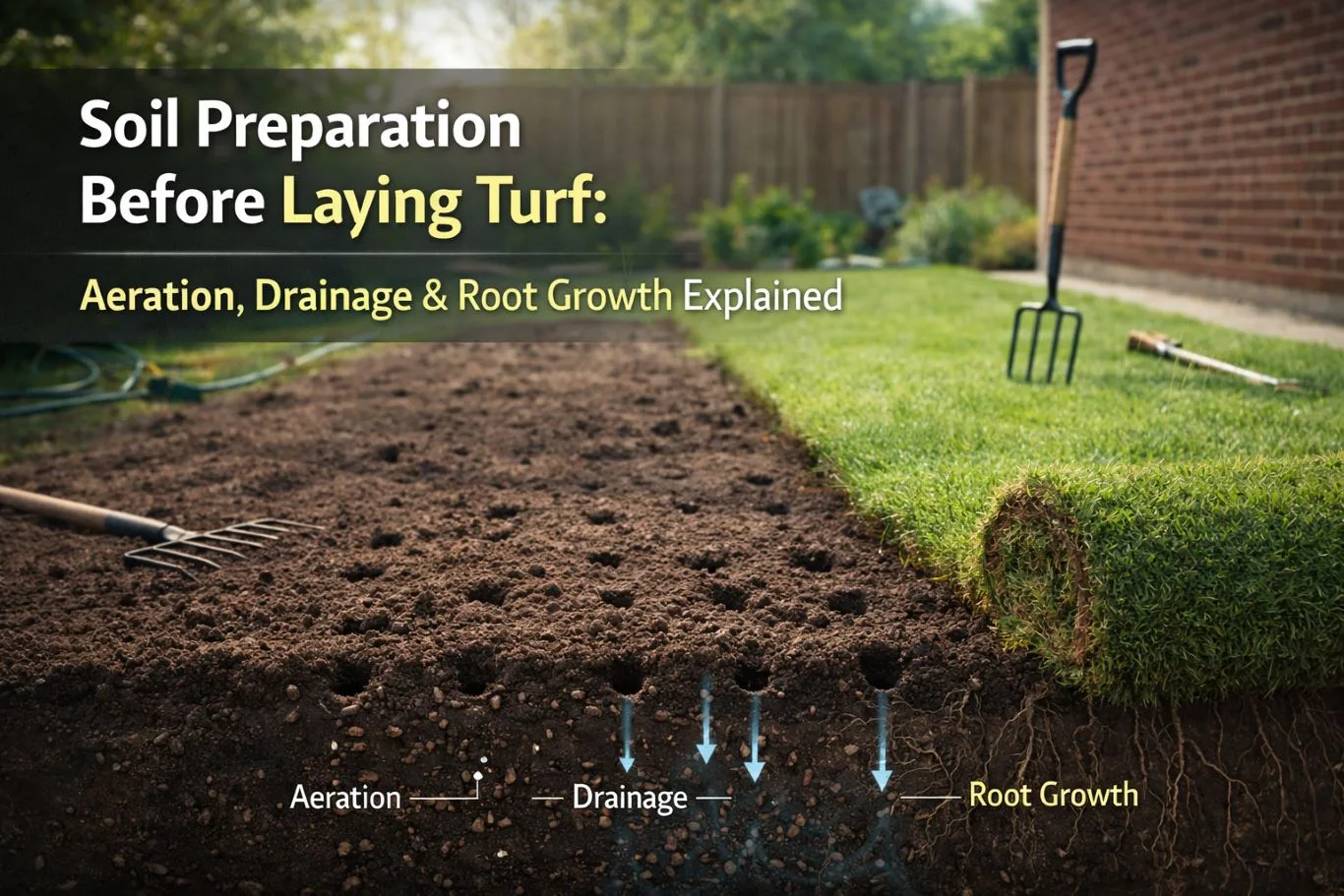
Improving drainage before laying turf is non-negotiable for clay-heavy areas. If water sits on your soil for more than a few hours, it will suffocate the new roots, leading to rot and fungal diseases. If you suspect your garden has poor drainage, you should incorporate sharp sand or grit into the top 100mm of the soil. This opens up the structure and allows water to move away from the surface more efficiently.
Nutrient Balancing
Turf loves a slightly acidic to neutral pH (around 6.0 to 7.0). If your soil is extremely alkaline or acidic, your grass will struggle to absorb the nutrients it needs. A simple soil test kit from a garden centre can tell you if you need to add lime to reduce acidity or sulphur to increase it. Adding a balanced pre-turf fertiliser at this stage is vital; think of it as giving your lawn a “packed lunch” to sustain it while it settles in.
Phase Three: Mechanical Preparation (Rotavating and Aerating)
The “crumb structure” of the soil is what you are aiming for. You want a finish that is loose and friable, rather than hard and clumpy.
The Benefits of Rotavating
Rotavating soil before turfing is the industry standard for a reason. It mechanically breaks up the soil to a depth of roughly 150mm. This does three things: it creates a loose bed for roots to grow into, it helps incorporate organic matter (like compost or topsoil), and it ensures the ground is level. If you are doing this manually, be prepared for some hard work—a mechanical rotavator can be rented and will save you days of labour.
Addressing the Aeration Question
A common query we hear is: do you need to aerate before laying turf? While aeration is often thought of as a maintenance task for established lawns, doing a thorough lawn aeration before turf application—especially if the soil has been heavily used or compacted by foot traffic—is a fantastic idea. Aeration with a garden fork or a hollow-tine tool breaks up deep compaction, ensuring that roots aren’t just limited to the top few centimetres of soil. By aerating before laying the turf, you ensure that the deep rooting system can flourish, creating a lawn that is far more drought-resistant.
Phase Four: The Final Level and Firming
Once the soil is rotavated and debris is cleared, you need to get the surface perfectly level. Use a wide rake to pull the soil in different directions, filling in the hollows and shaving off the high spots.
Firming the Bed
You don’t want a “fluffy” lawn. If the soil is too loose, the grass will sink unevenly as soon as you step on it or as it settles with the first rain. Once the level is correct, use a light lawn roller or simply walk over the entire area with your heels, “treading” the soil down. It should feel firm to the foot, without leaving deep impressions. After treading, give it a final, light rake to create a perfect, crumbly “seedbed” surface for the turf to grip onto.
Why Quality Matters: The Turf Supplies Essex Advantage
Preparing the soil is a professional-grade task, and many homeowners find that sourcing the right quality of topsoil to complement their existing earth is the hardest part. At Turf Supplies Essex, we provide not only the premium turf but also the expert advice needed for soil preparation before laying turf. Our professional natural grass turf delivery with installation services takes the stress out of the equation. We understand that your garden is a long-term investment, and we are committed to ensuring that the foundation we lay—or the foundation you prepare—is second to none.
FAQs Section
Q1: Is it really necessary to rotavate the entire garden?
Yes, if the soil is compacted. If you simply lay turf over hard, untouched soil, the roots will hit a barrier and grow laterally rather than downward, resulting in a weak lawn. Rotavating creates the “bridge” your grass needs to establish a deep, resilient root system.
Q2: How do I know if I have poor drainage in my Essex garden?
If after a heavy rain shower you see standing puddles that remain for more than an hour, your drainage is poor. Essex clay can be particularly difficult, and incorporating grit or sharp sand is usually the best remedy before turfing.
Q3: What is the best way to level the ground?
Use a long, straight board (a spirit level on a piece of timber works great) to pull the soil across the surface. This ensures that the ground is not just smooth, but genuinely level, preventing dips that could collect water later.
Q4: How fast can you deliver and install in Essex?
We pride ourselves on a fast, reliable local response. Depending on our current installation schedule, we can often arrange for the groundwork assessment and the turf delivery to take place within a short window, ensuring the soil is ready the moment the grass arrives.
Q5: Do you cover all areas of Essex?
Yes, our team operates throughout the county, from the urban centres to the rural coastal villages. No matter your location, we provide a professional and customer-focused service to ensure your lawn gets the best start possible.
Final Thoughts: The Foundation for a Perfect Lawn
The beauty of a lawn is visible to everyone, but the quality of the soil preparation remains the hidden secret of the professional landscaper. By taking the time to clear, aerate, rotavate, and level your site, you are removing the biggest risks to your project’s success. You are ensuring that your new lawn can anchor itself deeply, access moisture effectively, and survive the seasonal stresses of the British climate.
Remember, when you choose Turf Supplies Essex, you are partnering with a team that values your garden as much as you do. We believe in providing a seamless natural grass turf delivery with installation services, ensuring that your dream garden becomes a reality without the typical stress of manual labour. A lush, thick, and green lawn is within your reach—it just starts with the soil.