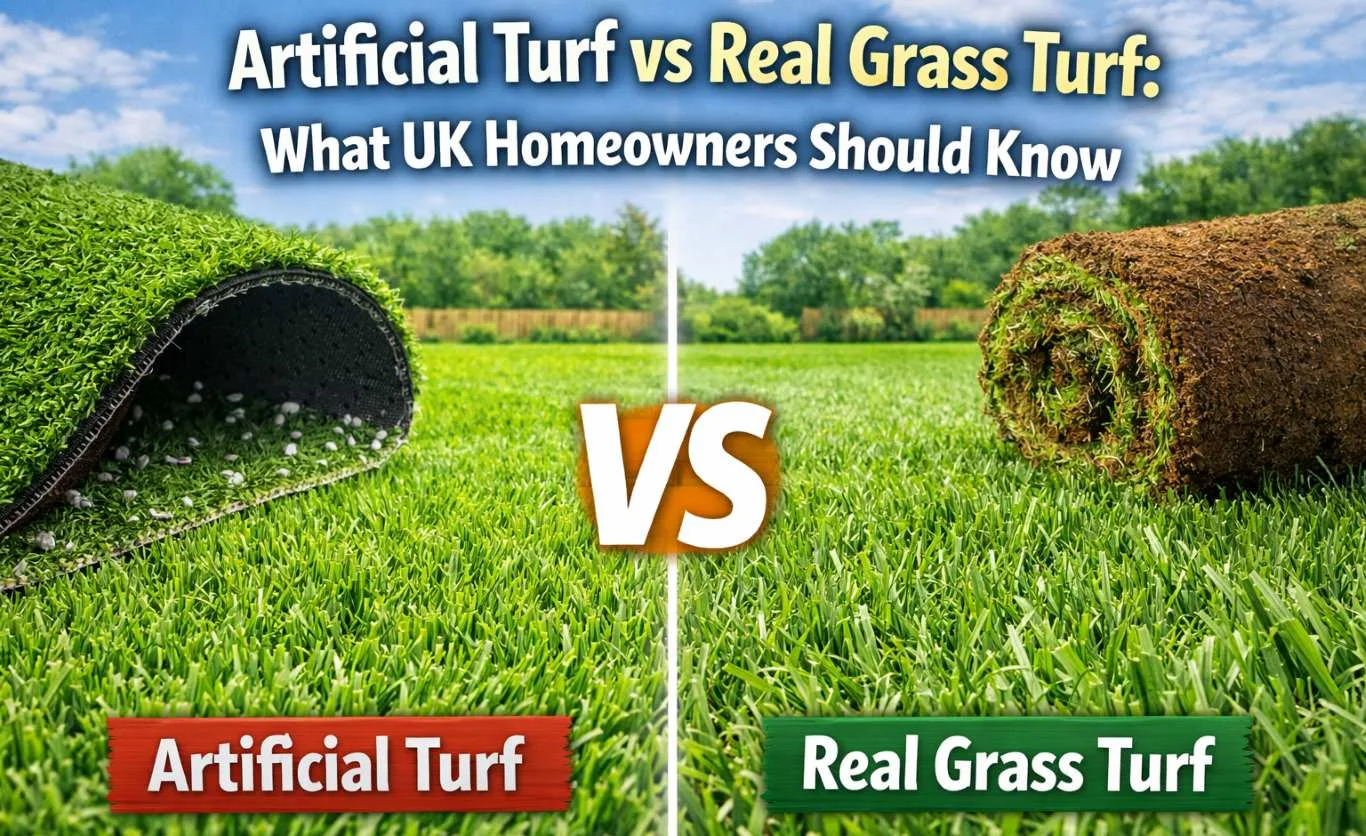

Creating a lush, green lawn is a dream for many homeowners across the UK — but choosing between artificial turf vs real grass turf can be surprisingly tricky. Both have their unique benefits, appearances, and maintenance needs, and the right option often depends on lifestyle, budget, and environmental priorities.
If you’re based in Essex and want expert guidance or professional turf installation, Turf Supplies Essex is one of the most trusted local specialists in natural turf supply and installation. Known for high-quality, UK-grown grass and affordable services, they make it easy to achieve that perfect garden finish.
Get in touch on WhatsApp and request your free quote :
In this guide, we’ll explore the differences between artificial grass and real grass turf, helping you decide which option best suits your outdoor space.
Understanding the Basics: Artificial Turf vs Real Grass Turf
Before comparing the two, it helps to understand what each option really offers.
- Artificial turf, also known as synthetic grass, is made from polyethylene or polypropylene materials designed to mimic the appearance of natural grass. It requires no mowing or watering and remains green throughout the year.
- Real grass turf, or natural lawn turf, is grown on soil and harvested for garden installation. It’s a living, breathing surface that provides natural freshness, cooling, and environmental benefits.
When it comes to artificial or real grass turf, your choice should reflect not just aesthetics, but also how you use your outdoor space and how much maintenance you’re prepared to handle.
The Case for Artificial Turf
Artificial turf has become increasingly popular, especially in urban environments where maintaining a natural lawn can be challenging. Let’s look at its advantages and limitations.
Advantages of Artificial Turf
- Low Maintenance
Artificial turf requires virtually no mowing, watering, or fertilising. This makes it ideal for busy homeowners or rental properties. - All-Weather Appearance
Synthetic lawns stay green year-round, regardless of weather conditions, making them suitable for areas with heavy foot traffic or shade. - Cost Savings Over Time
Although the upfront cost of installation is higher, the lack of watering and mowing expenses can save money in the long term. - Durability
Artificial turf is resilient against heavy use — perfect for children’s play areas, pet zones, or sports surfaces.
Disadvantages of Artificial Turf
- Heat Retention
Synthetic turf absorbs heat, making it uncomfortable underfoot during hot weather. Real grass, by contrast, naturally cools the air. - Environmental Concerns
Artificial turf is made from plastic, which means it’s non-biodegradable. It can contribute to landfill waste when replaced. - Lack of Natural Feel
Despite advances in design, artificial grass can’t truly replicate the texture and smell of fresh-cut, natural grass. - Limited Lifespan
Artificial lawns usually last around 10–15 years before needing replacement, which adds long-term cost and waste considerations.
The Case for Real Grass Turf
Real grass vs artificial turf remains a classic debate, but natural lawns continue to have undeniable advantages that appeal to both homeowners and the environment.
Advantages of Real Grass Turf
- Natural Beauty and Texture
No artificial surface can match the feel, scent, and natural beauty of real grass. It creates a softer, more comfortable environment for families and pets. - Eco-Friendly and Sustainable
Natural grass absorbs carbon dioxide, produces oxygen, and supports biodiversity. It’s a living part of your garden ecosystem. - Cooling Effect
Real lawns can cool the surrounding air by several degrees, making them ideal for summer relaxation. - Cost-Effective Installation
Compared to artificial turf, natural turf supply and installation are usually more affordable, particularly for smaller gardens. - Repairable and Regenerative
Unlike synthetic turf, real grass can recover from wear and damage over time, especially when properly maintained.
Disadvantages of Real Grass Turf
- Maintenance Requirements
Regular mowing, watering, and feeding are essential to keep natural turf healthy and green. - Seasonal Changes
Real lawns may lose some colour in winter or dry spells, although modern drought resistant turfs minimise this issue. - Pest and Weed Management
Natural lawns can attract insects and weeds, but proper lawn care and fertilisation can easily control this.
Artificial or Real Grass Turf: What to Consider Before Choosing
Before you decide, consider the following factors carefully:
1. Usage and Lifestyle
If your garden is used frequently by children or pets, you’ll need a durable surface. Artificial turf is tough, but real grass is safer and softer for play.
2. Maintenance Commitment
If you love gardening and don’t mind mowing or watering, natural grass turf will reward you with a rich, living lawn. But if you prefer a hands-off approach, artificial turf may suit you better.
3. Budget
While artificial grass involves a higher initial investment, real grass turf offers better value at installation. However, long-term maintenance costs may balance things out depending on usage.
4. Environmental Impact
For eco-conscious homeowners, natural grass turf vs artificial turf is an easy choice. Real grass contributes positively to the environment, whereas artificial turf does not.
5. Local Climate
In Essex’s mild yet occasionally dry climate, both options can work. However, natural turf varieties like Drought Defender Turf from Turf Supplies Essex are specifically cultivated to thrive with less water, offering a balance between beauty and sustainability.
Why Many Essex Homeowners Still Choose Real Grass Turf
Despite the growing trend of synthetic lawns, a significant number of property owners in Essex continue to favour real grass turf. The reason is simple: it offers a genuine connection with nature.
Real grass adds texture, freshness, and life to your garden in ways artificial alternatives cannot. With advances in turf cultivation, varieties like premium natural turf and drought tolerant lawn turf can now provide stunning, long-lasting lawns with less upkeep.
Local experts like Turf Supplies Essex make the process even easier — offering affordable, professional turf supply and installation across Essex and nearby areas. Their natural turf options are ideal for homeowners who want an eco-friendly lawn that looks beautiful in every season.
The Best of Both Worlds?
In some cases, a hybrid approach works best. For instance, you might install artificial turf in shaded or high-traffic areas and real grass in open garden spaces. This approach combines durability with natural charm.
However, if your goal is sustainability, comfort, and that unmistakable natural feel underfoot, real grass turf is still the superior choice — especially when professionally laid and maintained.
Final Thoughts: The Natural Winner
When comparing artificial turf vs real grass turf, both options offer distinct advantages. Artificial turf wins in convenience and durability, while real grass triumphs in natural beauty, environmental benefits, and long-term satisfaction.
If you’re seeking a green, vibrant lawn that’s both affordable and sustainable, Turf Supplies Essex is ready to help. Their expert team can supply and install premium natural turf across Essex — delivering quality, service, and lasting results for every garden.
and transform your outdoor space with lush, natural grass turf that feels as good as it looks.