
Quick Summary
- Identifying when not to lay turf is essential to avoid total lawn failure and wasted financial investment.
- Extreme weather conditions, such as hard frosts or intense summer heatwaves, are the primary indicators to postpone your project.
- Soil condition, particularly waterlogging or severe drought, plays a critical role in determining if the ground is ready for new grass.
- Understanding the difference between a temporary delay and an unsuitable season ensures your turf establishes a deep, healthy root system.
- Turf Supplies Essex offers professional guidance and expert installation to help homeowners navigate these timing challenges safely.
The Importance of Timing When Installing a New Lawn
A lush, green lawn is the crown jewel of any British garden, but achieving that perfect carpet of grass is as much about timing as it is about the quality of the product. While modern cultivation techniques allow for the harvest of high-quality grass throughout much of the year, there are specific environmental “red flags” that every gardener should recognise. Knowing when not to lay turf can be the difference between a thriving outdoor space and a costly, brown disappointment. For residents in our region, the local climate offers unique challenges, from coastal winds to heavy clay soils that hold onto frost. Turning to an experienced local specialist like Turf Supplies Essex ensures you receive not only premium natural grass turf supply & installation but also the professional honesty to tell you when the weather isn’t on your side.
Click the WhatsApp button below to get natural grass turf supply and installation services from Turf Supplies Essex :
The Risks of Poor Timing
Laying turf is a race against time. Once the grass is harvested from the field, its roots are severed, and it begins to lose moisture immediately. If it is placed onto a garden bed that is too cold, too dry, or too wet, those roots cannot “knit” into the soil. When this happens, the turf effectively starves.
The goal is to provide the grass with an environment that encourages immediate root respiration and growth. If the conditions are hostile, the turf will remain a separate layer on top of your garden, eventually shrinking, gapping, and dying. Recognising the signs of an unsuitable environment is the first step in protecting your investment.
Environmental Red Flags: When to Close the Garden Gate
Understanding the specific conditions that hamper growth is vital. Here are the most critical scenarios where you should put your landscaping plans on hold.
1. During a Hard Frost or Frozen Ground
Winter in Essex can bring sudden cold snaps that turn the garden soil into a block of ice. You should absolutely know when not to lay turf, and a frozen garden is the primary example.
If the ground is frozen, you cannot properly prepare the soil base. Furthermore, if you lay fresh turf onto frozen earth, the delicate root hairs will be killed instantly by the ice crystals. While turf is naturally hardy once established, in its “rolled” state, it is vulnerable. If a frost is forecast to last several days, it is always better to wait for a thaw and for the soil temperature to rise slightly before proceeding.
2. Intense Summer Heatwaves
While summer is a popular time for garden projects, extreme heat is a major enemy of new grass. If the temperature is consistently hitting the high 20s or 30s, the evaporation rate is often higher than a domestic sprinkler can keep up with.
In these conditions, the turf can literally “cook” in its own rolls if not laid immediately, and once laid, it can shrink within hours. If you cannot commit to watering the lawn several times a day during a heatwave, this is a clear sign of when to wait for a cooler spell.
3. Waterlogged or Flooded Soil
Essex is famous for its “London Clay” soil, which is notorious for poor drainage. If your garden has standing water or feels like a sponge when you walk on it, it is not ready for turf.
Laying turf on waterlogged soil creates an anaerobic environment—meaning there is no oxygen available for the roots. Without oxygen, the roots will rot rather than grow. Additionally, the sheer weight of a person walking on wet soil to lay the turf will cause severe compaction, making it even harder for the lawn to thrive in the long run.
4. High Winds and Drying Gales
Often overlooked, strong winds can be just as damaging as high heat. A constant, drying wind will strip moisture from the grass blades faster than the roots can replace it. If the forecast predicts a period of heavy gales, particularly the drying easterly winds we sometimes experience in the UK, it is often wise to delay the installation by a few days to prevent the turf from desiccation.
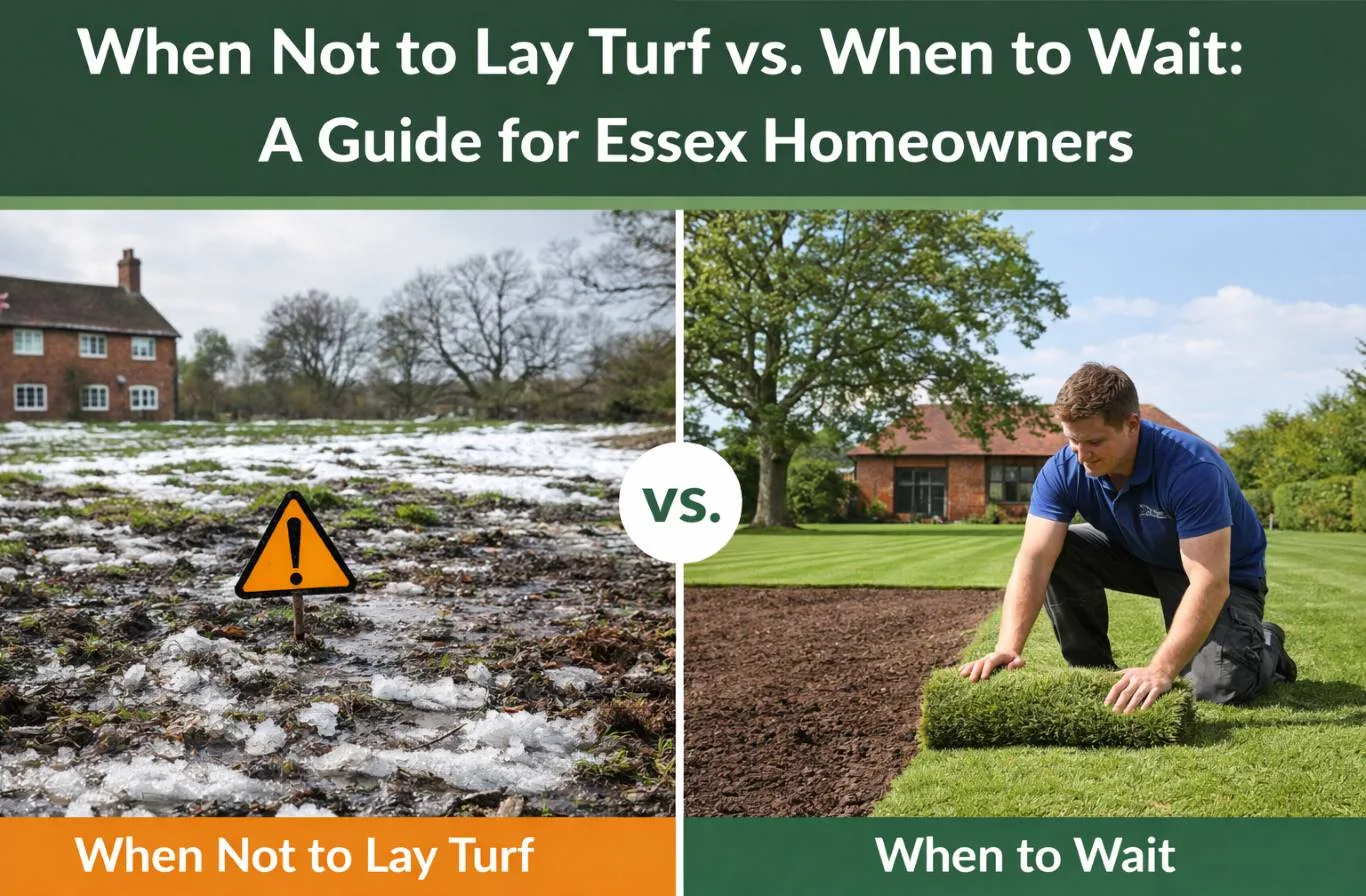
When Not to Lay Turf vs. When to Wait
There is a subtle but important distinction between a season that is entirely unsuitable and a temporary weather event that simply requires a short delay.
The “Wait” Category
These are temporary hurdles. If you have ordered your turf and a sudden heavy rainstorm occurs, you should wait 24 to 48 hours for the surface water to drain. Similarly, if a single night of light frost is expected, you can often proceed once the sun has warmed the ground by mid-morning. These are “waits” rather than “stops.”
The “Do Not Lay” Category
This applies to systemic issues. If your soil has not been properly prepared, if there is an active drought-related hosepipe ban in your area, or if we are in the middle of a prolonged winter freeze, you should not lay turf. In these instances, no amount of aftercare will save a lawn that has been installed in a fundamentally hostile environment.
The Importance of Professional Ground Assessment
For many homeowners, judging the moisture level or the “readiness” of the soil is difficult. This is where the value of a professional service becomes apparent. Turf Supplies Essex doesn’t just deliver rolls of grass; they provide a comprehensive look at your garden’s ecosystem.
By opting for a professional installation, you benefit from experts who can read the local weather patterns and soil conditions. They can advise on whether your drainage needs improving before the turf goes down, or if the soil temperature is currently optimal for rapid root establishment. This professional oversight significantly reduces the risk of turf failure.
Seasonal Windows: The UK Calendar
While we’ve discussed when not to lay, understanding the “Green Zones” of the year helps put those red flags into context.
- Spring (March to May): Usually the goldilocks zone. Plenty of rain and rising temperatures. However, watch out for late “April showers” that might waterlog clay soils.
- Autumn (September to November): Many professionals consider this the best time. The ground is warm from summer, but the air is cool and moist. The main risk here is the onset of early winter frosts.
- Winter (December to February): Possible, but risky. This is the most common time when you will be told when not to lay turf due to frozen ground or excessive saturation.
Preparing the Ground While You Wait
If you find yourself in a period where laying turf is ill-advised, use that time to your advantage. Preparation is the foundation of a great lawn.
- Improve Drainage: If the ground is too wet, use the waiting period to install land drains or incorporate grit and organic matter into the soil to improve its structure.
- Weed Clearance: If it’s too hot to lay turf, it’s a great time to ensure all perennial weeds are completely eradicated from the base.
- Levelling: Use the time to rake and tread the soil repeatedly. A perfectly level base is much easier to achieve when you aren’t rushing to beat a delivery of fresh turf.
Frequently Asked Questions
1. Can I lay turf if a hosepipe ban is in place?
Generally, we advise against it. New turf requires significant and consistent watering for the first 21 days. Without the ability to use a hosepipe or sprinkler, it is almost impossible to keep the grass alive in the summer. It is a definitive time of when not to lay turf.
2. What should I do if my turf arrives but the weather turns bad?
If the turf is already on your driveway, you must unroll it elsewhere (like a patio or spare patch of dirt) and keep it watered. Never leave turf in its rolled-up state for more than 24 hours, especially in warmer weather, as it will begin to ferment and die from the inside out.
3. Is Essex clay soil particularly bad for winter laying?
Clay retains a lot of water and takes longer to thaw than sandy soil. If you live in an area with heavy clay, you will likely have a longer window in the winter where laying turf is not recommended compared to gardens with lighter soil.
4. Do you offer advice on timing for local Essex residents?
Absolutely. Turf Supplies Essex prides itself on being a local partner. We monitor regional weather forecasts and soil conditions across Epping, Chelmsford, and the wider county to ensure our customers are laying their turf at the optimal moment.
5. How quickly can you respond if the weather clears up?
We aim for a rapid response. Once the conditions in your garden shift from “unsuitable” back to “optimal,” we work closely with our customers to schedule delivery and installation as quickly as possible to take advantage of the window.
Final Thoughts on Timing Your New Lawn
In the pursuit of a perfect garden, patience is often the most valuable tool in your shed. While it can be tempting to push ahead with a project to meet a weekend deadline, ignoring the environmental signs of when not to lay turf will only lead to more work and expense in the future. By respecting the natural requirements of the grass and the limitations of your soil, you ensure that once the lawn is down, it stays down.
For those who want to ensure their garden transformation is handled with the utmost care, Turf Supplies Essex remains the premier choice for natural grass turf supply & installation. We combine high-quality products with the local expertise needed to navigate the unpredictable British weather, ensuring your new lawn gets the start it deserves.
Remember, a great lawn isn’t just about the day it’s laid—it’s about the years of growth that follow. Waiting for the right moment is the first step toward that success.