
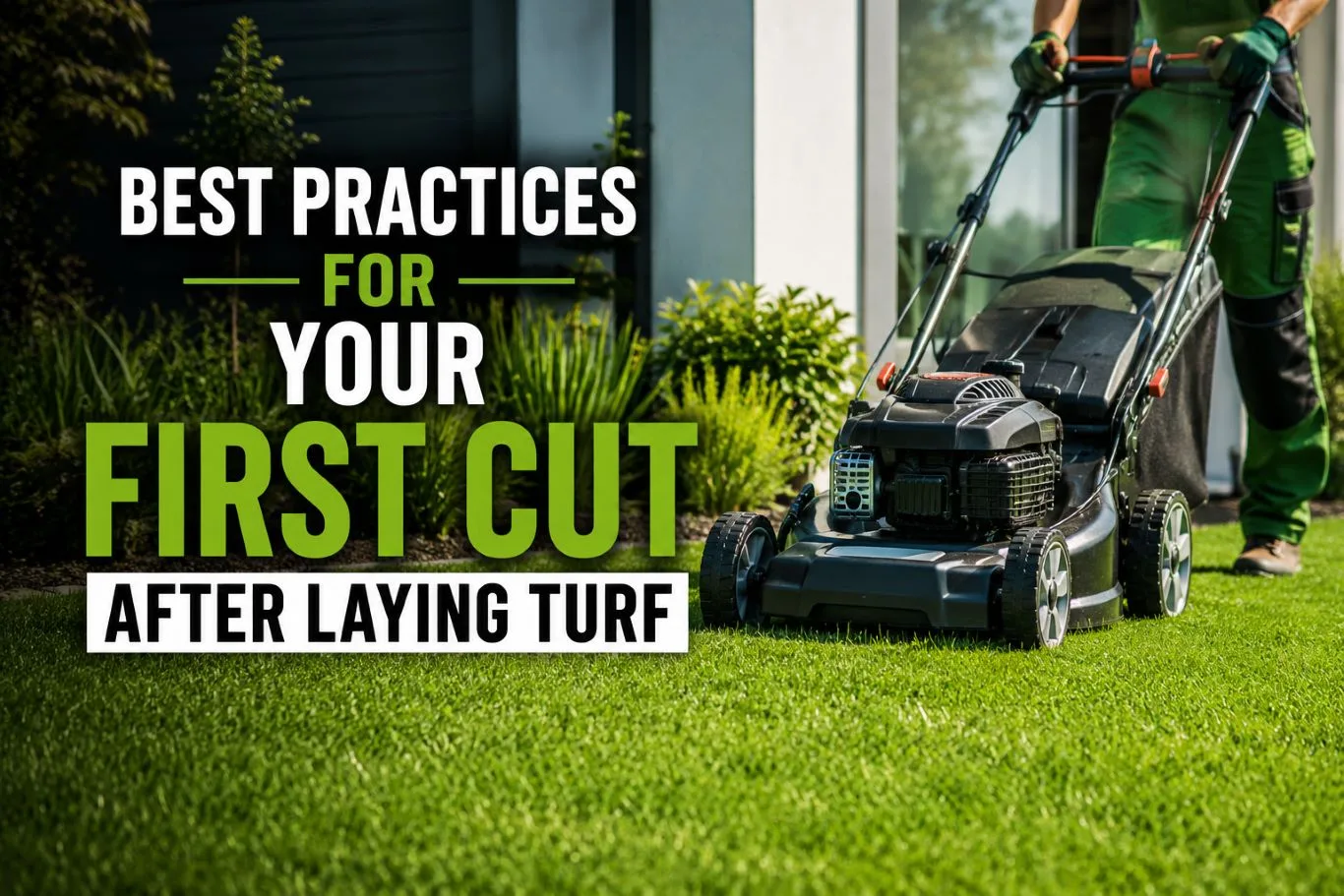
Quick Summary
- Performing the first cut after laying turf is a delicate milestone that determines the long-term density and health of your new lawn.
- Timing is everything; you must wait until the root system has successfully anchored into the soil—usually between 14 and 21 days.
- The “one-third rule” is vital during the initial mow to avoid shocking the grass plants and stunting root development.
- Equipment preparation, specifically ensuring razor-sharp mower blades, is essential to prevent tearing the young sward.
- Turf Supplies Essex provides high-quality natural grass turf with delivery & installation services, helping homeowners navigate the critical weeks of establishment.
Why the First Cut After Laying Turf is a Critical Milestone
Transforming your garden with a fresh lawn is an investment in both time and money. After the rolls are down and the initial watering phase is underway, the most common question we encounter is when to finally bring out the mower. The first cut after laying turf is far more than just a cosmetic tidy-up; it is a technical procedure that encourages the grass to “tiller”—a process where individual plants send out side-shoots to create a thick, carpet-like surface. However, rushing into this task can lead to disaster. If the roots haven’t sufficiently gripped the earth, the suction from a mower can lift the turf rolls, tearing the fragile new root hairs and setting your lawn back by weeks. At Turf Supplies Essex, we specialise in natural grass turf with delivery & installation services, and we always emphasise to our customers that patience during these first three weeks is what separates a professional finish from a patchy failure.
Ready to give your new lawn its first trim? Message us on WhatsApp for professional advice on the perfect timing :
Determining the Right Time: The Tug Test
Before you even wheel the mower out of the shed, you need biological proof that the grass is ready. The calendar is a helpful guide, but the soil conditions and local Essex weather play a massive role in how quickly roots establish.
To check for readiness, perform the “tug test.” Find a corner or an edge of a turf roll and gently try to lift it. If you feel significant resistance, it means the roots have successfully knitted into the topsoil. If the turf lifts up easily, it is not yet ready for a mow. In the height of a warm spring, this might happen in 10 days; in a cooler autumn, it may take nearly a month. Never mow until the turf feels “nailed down” to the ground.
Preparing Your Equipment for the Task
Young grass is incredibly tender. While an established lawn can handle a slightly dull blade, a new lawn cannot. If your mower blades are blunt, they will “chew” the grass rather than slicing it. This creates frayed, white tips on the grass blades, which not only looks unsightly but also leaves the plant vulnerable to diseases like Red Thread.
- Sharpen the Blades: Ensure your mower has been serviced or the blades sharpened specifically for this first session.
- Check the Height: Set your mower to its highest possible setting. For the first few mows, you aren’t aiming for a bowling-green finish; you are simply “topping” the grass to encourage lateral growth.
- Clean the Deck: Ensure there is no dried mud or old grass clippings under the mower that could drop off and smother the new sward.
The One-Third Rule and Mowing Technique
When you finally start the engine for the first cut after laying turf, your goal is to be as gentle as possible. The golden rule of lawn care is to never remove more than one-third of the grass blade in a single session. For a first cut, we recommend being even more conservative—removing just the top 20% is ideal.
Avoid Scalping
If the grass has grown quite long—perhaps reaching 6cm or 7cm—resist the urge to cut it down to 2cm immediately. Cutting too deep (scalping) removes the plant’s “solar panels,” stopping it from producing the energy needed to grow roots. Instead, take a tiny bit off the top, wait three days, and then take a little more.
Direction of Travel
Mow in a different direction than you laid the turf. If you laid the rolls horizontally, try mowing vertically. This helps to stand the grass blades up and ensures an even cut across the seams.
Ground Moisture
Ensure the lawn is not soaking wet when you mow. While you’ve likely been watering heavily, wait for a dry window where the grass blades are dry to the touch, but the soil beneath is still moist. Mowing a sodden lawn with a heavy petrol mower will leave ruts and footprints that are nearly impossible to remove later.
Essential Aftercare Following the First Trim
Once that first mow is complete, your work isn’t quite over. This is the perfect time to assess the health of the lawn.
- Collect the Clippings: Always use a grass box for the first few mows. Leaving heavy clumps of clippings on a new lawn can block sunlight and create damp patches that encourage rot.
- Monitor the Seams: Check the joins between the rolls. If the mower has caused any slight shifting or if you see gaps appearing, fill them immediately with a light dusting of screened topsoil and a bit of seed.
- Hydration: Even though you are mowing, the lawn still needs moisture. A light water after the first mow can help the plant recover from the “stress” of being cut.
Managing the Essex Soil Profile
In many parts of Essex, particularly areas with heavy clay, the ground can become very hard or very boggy quite quickly. This affects how you mow. If you are on heavy clay, be mindful that a heavy mower can compact the soil, making it harder for roots to breathe. If your garden is particularly soft, consider using a lightweight electric mower or even a manual push-mower for the first two sessions to minimise the weight load on the new turf.
Frequently Asked Questions
Q1: What if I waited too long and the grass is massive?
If the grass is very long, do not try to cut it to the “normal” height in one go. Raise the mower to its maximum height, take the tips off, and repeat the process every few days, lowering the blade slightly each time until you reach the desired height.
Q2: Should I fertilise immediately after the first cut?
Usually, no. If you used a pre-turf fertiliser during the installation phase, there should be enough nutrients to last the first 6–8 weeks. Adding more too soon can “burn” the tender new roots.
Q3: Do you offer turf maintenance advice in my area?
Yes, Turf Supplies Essex provides ongoing support to all our customers. Whether you are in Chelmsford, Southend, or a smaller village, we can provide advice tailored to your specific local soil conditions.
Q4: Can I use a strimmer on the edges for the first cut?
Be very careful. The high-speed nylon cord of a strimmer can easily catch the edge of a turf roll and rip it up. It is often safer to use manual edging shears for the first few weeks until the edges are completely knitted in.
Q5: How quickly can you deliver fresh turf to me?
We offer a fast and reliable local response. Because we are local, we ensure that our natural grass turf reaches you as fresh as possible, which is the most important factor in ensuring it roots quickly enough for that first cut.
Final Thoughts: A Foundation for the Future
The first cut after laying turf is a rewarding moment. It marks the transition from a building site to a living garden. By following these professional best practices—checking root strength, using sharp blades, and maintaining a high cutting height—you are ensuring that your lawn remains a lush, green asset for your home for many years to come.
At Turf Supplies Essex, we take pride in being more than just a supplier. We are a customer-focused team dedicated to providing the best natural grass turf with delivery & installation services in the region. We want your garden to be a success, and we are always here to provide the expert guidance you need to keep your new lawn in peak condition.
Looking to buy natural grass turf with installation services in Essex?