Quick Summary
- Understanding the complete new turf growth timeline helps homeowners plan proper watering, mowing, and foot traffic milestones without risking root damage.
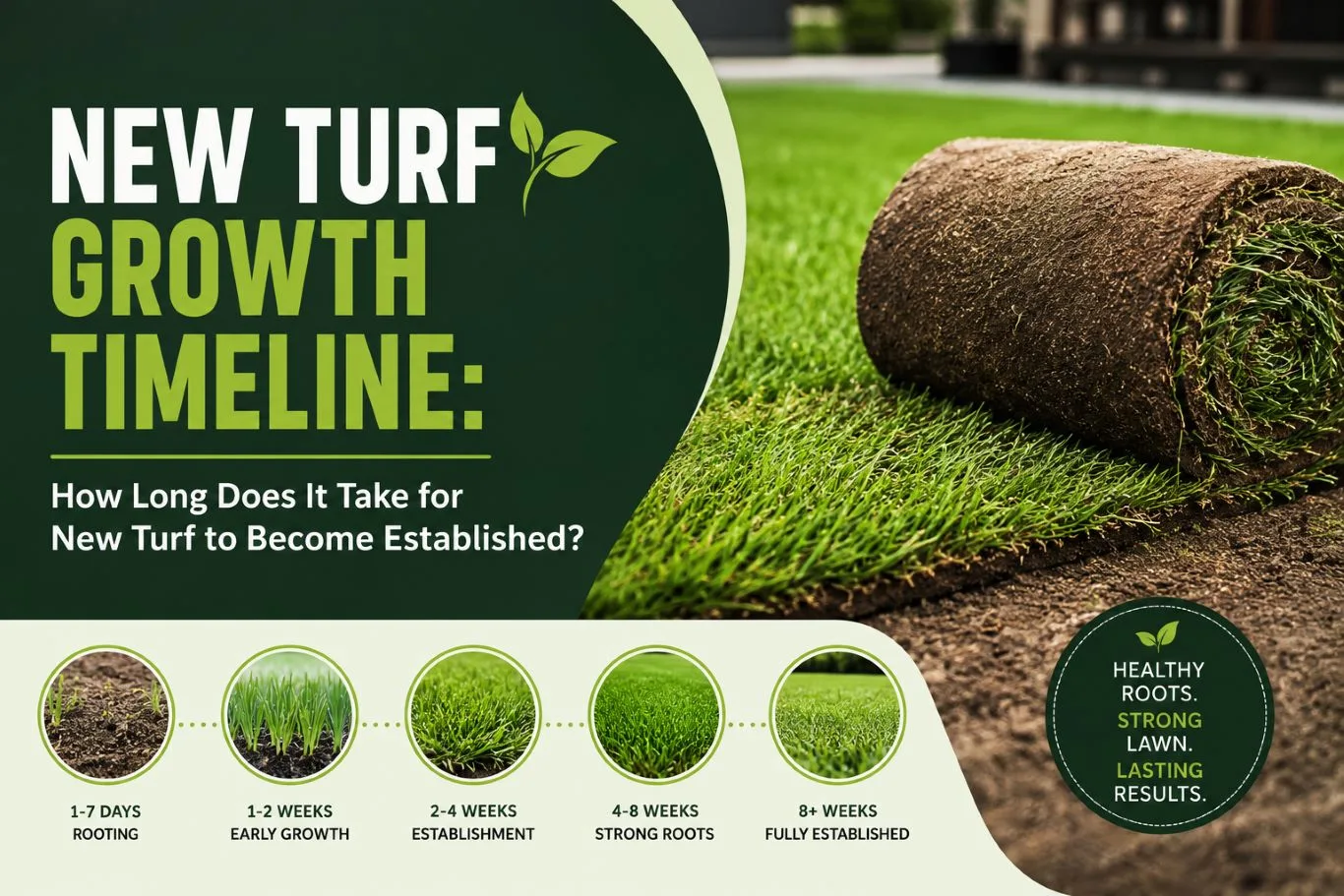
- The critical initial rooting phase occurs within the first 1 to 7 days, as fragile white root hairs push out from the sod backing layer into the topsoil.
- Early top growth accelerates between weeks 1 and 2, signaling the ideal window for a high-clearance first lawn cut.
- Strong structural establishment is achieved by weeks 4 to 8, allowing normal family foot traffic and routine maintenance.
- Turf Supplies Essex provides top-quality natural grass turf rolls with delivery & installation services, including landscaping materials like topsoil & wood chippings, to guarantee seamless lawn integration across regional soils.
Introduction
Installing a fresh, natural lawn is one of the most transformative updates you can make to your outdoor space. Watching an uneven, patchy garden turn into an emerald-green sanctuary provides instant visual gratification. However, transformed surface aesthetics are only half the battle. What truly determines whether your investment thrives for years or deteriorates after a few hot weeks is what happens out of sight, beneath the soil surface. Knowing the exact new turf growth timeline gives you the clarity needed to navigate every milestone of root development, irrigation, and first-cut mowing with complete confidence. In our region, where garden beds range from heavy clay to fast-draining chalky loams, tailoring your care strategy to match the plant’s natural development stages is essential. As trusted turf suppliers in Essex, the team at Turf Supplies Essex provides top-quality natural grass turf rolls with delivery & installation services, including landscaping materials like topsoil & wood chippings, guiding local property owners through every stage of lawn establishment.
Don’t guess when to water or perform your first cut—message us on WhatsApp now for expert aftercare advice or a turf installation quote :
Phase 1: Days 1 to 7 – Initial Rooting Phase
The first seven days following installation represent the most vulnerable window in your lawn’s lifecycle. When grass rolls are harvested from commercial fields, their root networks are mechanically severed. The sod relies entirely on its shallow backing layer until fresh root hairs can anchor into your underlying topsoil.
During these initial days, the grass plant deploys its immediate energy reserves to push out delicate, bright white adventitious roots. When asking how long does new turf take to root, the initial physical anchor begins within 3 to 5 days, provided the subsoil remains consistently damp.
[ INITIAL ROOT PENETRATION PHASE: DAYS 1 TO 7 ]

+-------------------+       +-------------------+       +-------------------+
| Harvested Sod Mat |  -->  | Daily Deep Morning|  -->  | Fresh White Root  |
| Sits on Prepared  |       | Irrigation Soak   |       | Hairs Anchor Into |
| Topsoil Base      |       | Penetrates Base   |       | Subsoil (Day 3–5) |
+-------------------+       +-------------------+       +-------------------+
Critical Rules for Week One
- Deep Saturation: Water the lawn thoroughly once or twice daily during the early morning hours. Ensure the water penetrates completely through the turf mat and dampens the top 50mm of the underlying earth.
- Absolute Foot Traffic Ban: Keep children, pets, and garden furniture off the green space. Walking across unanchored sod tears the fragile root threads as they attempt to attach to soil particles.
- Monitor Edge Moisture: Perimeter edges along stone patios, gravel paths, and timber fences dry out fastest due to radiated heat. Check these seams daily to prevent shrink gaps from opening up.
Phase 2: Weeks 1 to 2 – Early Growth Phase
As you enter the second week, the subterranean environment changes rapidly. The initial white root hairs begin branching horizontally and vertically, knitting the sod rolls into the ground below. Above ground, blade growth speeds up as the plant resumes active photosynthesis.
By day 10 to 14, you will notice a visible surge in vertical leaf height. This rapid top-growth indicates that the root network is successfully pulling up groundwater and dissolved minerals from the base soil.
The First Mow Milestone
A crucial step in caring for newly laid turf is knowing when and how to perform the initial trim.
1.Perform the Tug Test: Anchorage Check.
Gently grab a small handful of grass blades near the center of a roll and tug upward gently. If the sod resists and stays anchored firmly to the ground, the root network is strong enough for mowing.
2.Set High Mower Clearance: Clearance Setting.
Raise your lawnmower deck to its highest setting (roughly 50mm to 60mm). Never remove more than the top 10% to 15% of the leaf length during the first cut to avoid shocking the young plants.
3.Verify Sharp Blades: Blade Quality.
Ensure your mower blades are razor-sharp. Dull, pitted metal tears and shreds young leaf tissue rather than cutting cleanly, leaving frayed tips that lose water rapidly.
Phase 3: Weeks 2 to 4 – Establishment Phase
Entering the third and fourth weeks marks a major shift in the new turf establishment process. The individual turf rolls should now be knitted together seamlessly, making seam lines across the garden invisible.
| Timeline Stage | Underground Root Profile | Recommended Maintenance Action |
|---|---|---|
| Days 1 to 7 (Rooting) | Fine white hairs (10mm–25mm) | Heavy daily morning hydration |
| Weeks 1 to 2 (Early) | Branching roots (25mm–50mm) | High-clearance first lawn cut |
| Weeks 2 to 4 (Establish) | Deep anchor matrix (50mm–100mm) | Transition to deep bi-weekly soak |
| Weeks 4 to 8 (Strong) | Dense web (100mm–150mm+) | Light foot traffic & normal cut |
| Weeks 8+ (Fully Bound) | Mature subterranean network | Standard seasonal lawn care |
Irrigation Adjustments
During this phase, you can step down your irrigation frequency while increasing the volume per session. Shift from daily watering to soaking the lawn thoroughly two to three times a week. Applying water less frequently but deeper forces the root matrix to tunnel straight down into subterranean moisture layers, building natural drought resilience.
Phase 4: Weeks 4 to 8 – Strong Root Matrix
By the end of the first month, your new lawn is well on its way to full maturity. The underground root system now extends up to 150mm into the subsoil, creating a dense, interconnected web that stabilizes the ground.
At this stage, the lawn can comfortably handle light-to-moderate family foot traffic, casual walking, and garden activities. You can gradually lower your lawnmower cutting deck over successive cuts, aiming for a standard spring/summer height of 35mm to 40mm for general family lawns.
Phase 5: Weeks 8+ – Fully Established Lawn
At the two-month mark, your landscape has achieved full biological integration. The turf functions as an established, single lawn system capable of handling heavy summer use, pets, and climate variations.
[ 8-WEEK MATURITY MILESTONE OVERVIEW ]

+-------------------+       +-------------------+       +-------------------+
| 150mm+ Deep Root  |  -->  | Seamless Sward    |  -->  | Full High-Traffic |
| Subsoil Matrix    |       | Surface Canopy    |       | Active Family Use |
+-------------------+       +-------------------+       +-------------------+
From week eight onward, shift to standard new lawn care routines:
- Deep, Infrequent Watering: Water deeply once a week during warm dry spells to maintain root depth.
- Balanced Feeding: Apply a balanced seasonal fertilizer during autumn or spring to nourish the dense root matrix.
- Regular Mowing: Maintain a consistent cutting schedule, removing no more than one-third of the total blade height in any single session.
Factors That Impact Your Timeline
While the 8-week roadmap serves as a reliable benchmark, environmental variables can speed up or slow down your progress:
- Soil Preparation: Taking time for thorough ground cultivation, removing stones, and applying a 50mm layer of rich, screened topsoil speeds up root anchoring significantly compared to laying sod over hard, compacted clay.
- Seasonal Timing: Laying sod in mid-spring or early autumn provides the ideal blend of mild air temperatures, warm soil, and natural rainfall, accelerating root growth. Summer installations require much stricter watering management to prevent moisture loss.
- Grass Variety Quality: Utilizing premium, fresh-cut rolls harvested directly from regional cultivation fields ensures the sod arrives hydrated and ready to take root without transit delay.
FAQs Section
1. How many days after laying new turf can I let my dog on the lawn?
It is best to keep pets off the new grass completely for the first 14 days while the fragile initial root hairs anchor into the soil. Between weeks 3 and 4, light access for short toilet visits is fine, but avoid high-speed running or digging until the 6 to 8-week mark, when the root matrix is fully bound.
2. What happens if I mow my new turf too early before it has rooted?
Mowing too early can cause the lawnmower’s wheels or suction deck to lift, twist, and dislodge unanchored turf rolls. This tears the young, fragile root hairs away from the topsoil, setting the establishment timeline back by several weeks or causing patchy dieback. Always perform the “tug test” before your first cut.
3. Why are some seams between my turf rolls still visible after three weeks?
Visible seams after three weeks usually indicate that the sod backing shrank slightly during a warm spell or that the edges did not receive enough water during week one. To fix this, brush a fine top-dressing mixture of sandy loam and compost into the open seams, then keep the area damp to encourage horizontal grass spreading.
4. What specific locations across Essex do your installation crews support?
We offer comprehensive delivery, groundwork preparation, and professional installation services across the entire county of Essex and its close surrounding borders, including key residential hubs like Chelmsford, Brentwood, Romford, Billericay, Colchester, and Southend-on-Sea.
5. What is your typical turnaround time for delivering fresh turf or topsoil?
Because we operate our own regional transport vehicles and harvest fresh grass from local fields to order, we can typically evaluate your lawn measurements, provide a clear, itemised quote, and deliver fresh turf rolls straight to your driveway within 24 to 48 hours.
Final Thoughts: Navigating Your Lawn’s Journey
Patience and consistent care are the keys to a beautiful outdoor space. By understanding the new turf growth timeline, protecting fragile early root hairs, adjusting your watering schedule as the sod matures, and waiting for the right moment for your first mow, you ensure your investment develops into a deep-rooting, resilient green sanctuary.
When you partner with Turf Supplies Essex, you are working with reliable, affordable, and deeply trusted specialists offering turf laying services in Essex. Our top-quality natural grass turf rolls with delivery & installation services, including landscaping materials like topsoil & wood chippings, ensure that your garden renovation is backed by expert guidance from start to finish. Let our family-run team handle the physical groundwork, delivery, and precision installation for your next project. Connect with us today, and enjoy a beautiful, long-lasting lawn for years to come.
Transform your garden with farm-fresh natural grass rolls—delivered straight to your home and expertly installed by our local Essex team :