Quick Summary
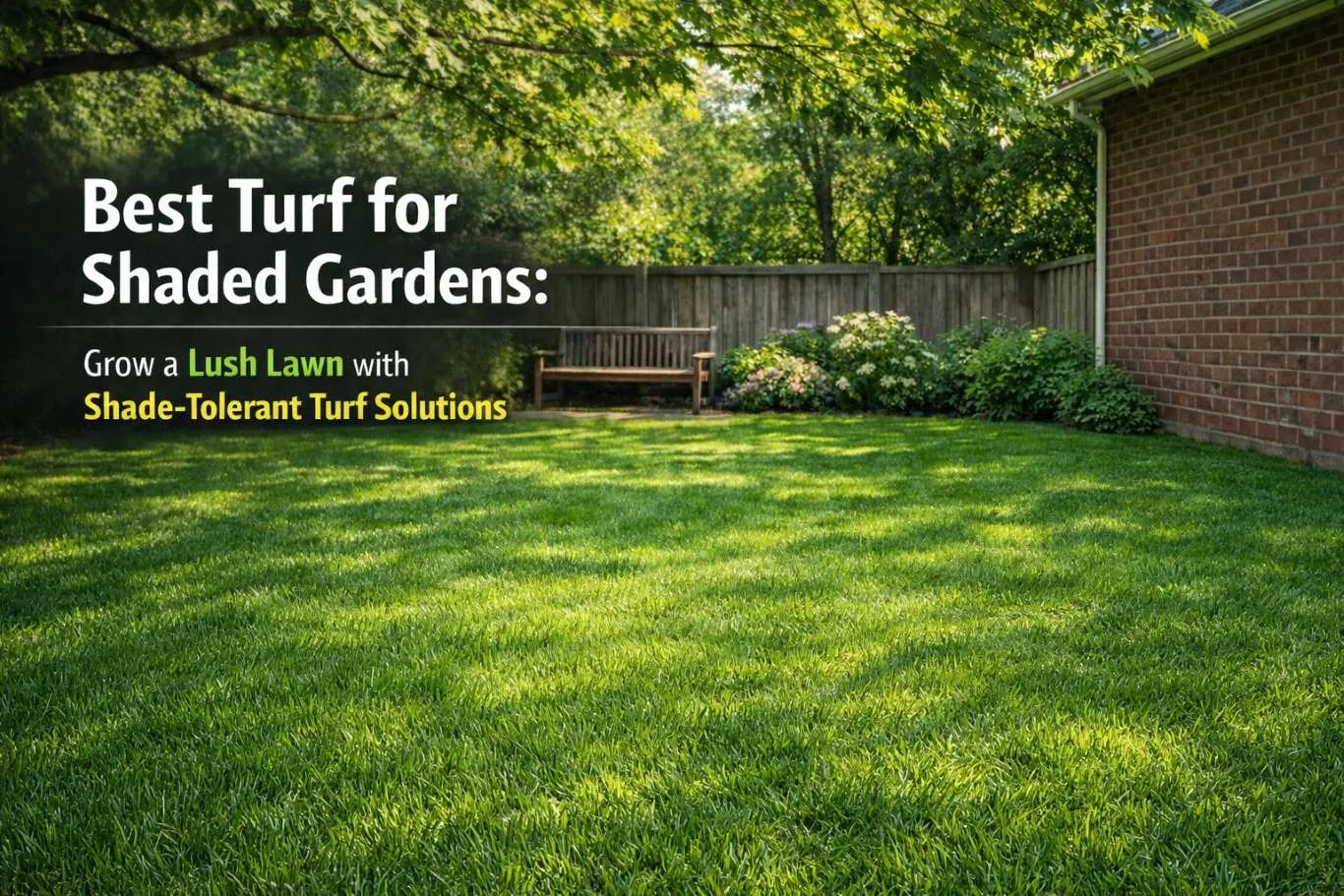
- Identifying the best turf for shaded gardens is crucial for north-facing properties or gardens with significant tree canopy cover.
- Standard meadow turf often fails in low light; specialised lawn turf for shaded areas uses fescue-dominant blends to thrive with limited photosynthesis.
- Success in shady spots relies on specific maintenance, such as higher mowing heights and improved aeration to prevent moss.
- Establishment of shade-tolerant varieties typically takes 10–14 days, requiring consistent moisture during the initial phase.
- Turf Supplies Essex offers the “Shade Master” variety, specifically cultivated to create a lush, deep green finish in dim conditions across the UK.
Transforming Dim Spaces with the Best Turf for Shaded Gardens
For many homeowners in the UK, the quest for a perfect lawn is often thwarted by the shadow of a tall fence, a north-facing house, or the canopy of a mature oak tree. Traditional grass varieties are sunlight-hungry organisms, and when deprived of those vital UV rays, they tend to become thin, patchy, and eventually succumb to moss and weeds. However, having a dim garden doesn’t mean you have to settle for a muddy yard. Finding the best turf for shaded gardens is the first step toward transforming those tricky corners into vibrant, green retreats. It requires a move away from standard utility mixes towards specialised, fescue-heavy blends that have been genetically selected for their low-light resilience. At Turf Supplies Essex, we understand that every garden in our region has its own micro-climate. As a reliable provider of shade-tolerant turf with installation services, we help local residents navigate these horticultural hurdles to ensure their outdoor spaces thrive, regardless of sunlight levels.
Bring life back to the dimmest corners of your garden; click the WhatsApp button now to request your free, no-obligation estimate :
The Challenge of Low-Light Landscaping
To choose the right product, it is helpful to understand why normal grass struggles in the dark. Sunlight is the primary energy source for grass; it fuels photosynthesis, which in turn allows the plant to grow roots and recover from foot traffic. When light levels drop, the grass enters a state of stress. It begins to grow taller and thinner (a process called etiolation) as it “stretches” to find light, making the sward look sparse and weak.
Furthermore, shaded areas are often damp and suffer from poor air circulation. This creates a perfect breeding ground for moss and fungal diseases like Red Thread. The best turf for shaded gardens isn’t just “shade-resistant”; it is also bred to handle the higher humidity and lower evaporation rates typical of secluded garden spots.
Introducing Shade Master: The Specialist Solution
When standard turf isn’t enough, we recommend a variety specifically engineered for the task. Our Shade Master Turf is the benchmark for lawn turf for shaded areas, designed to maintain its colour and density where other grasses fail.
Key Characteristics of Shade Master
- Sunlight Requirements: While no grass can grow in absolute darkness, this variety thrives with just 3–6 hours of filtered sunlight per day.
- Texture and Colour: It offers a deep green hue and a finer leaf texture compared to rugged ryegrass, giving the garden a premium, manicured look.
- Soil Versatility: Whether your garden sits on the heavy clay common in parts of Essex or a more forgiving loam, this turf establishes a strong root system.
- Durability: It is rated for low to medium foot traffic, making it ideal for ornamental borders, quiet seating areas, or shaded family gardens.
Why Fescues are the Secret to Shade Success
If you look at the composition of lawn grass for shaded areas, you will find a high percentage of Red Fescues (Festuca rubra) and Hard Fescues. Unlike Perennial Ryegrass, which is the “muscle” of a standard lawn, Fescues are the “marathon runners.” They grow more slowly, require less nitrogen, and are far more efficient at capturing light in the lower end of the spectrum.
By using a blend that leans heavily on these fescues, you create a lawn that doesn’t “panic” when the sun goes behind a wall. This is the fundamental difference when looking for lawn grass that grows in shade—it’s about the biological efficiency of the leaf blade rather than just the speed of growth.
Preparation and Installation for Shady Spots
Laying turf for shady areas requires a slightly more refined approach to ground preparation than a wide-open field would. Because these areas are often damp, drainage is your number one priority.
- Soil Aeration: Before installation, ensure the soil is thoroughly turned and aerated. Adding a layer of sharp sand or a high-quality sandy topsoil can help prevent the “boggy” conditions that lead to root rot in the shade.
- Removing Competition: If the shade is caused by trees, remember that the tree roots are also competing for moisture and nutrients. Ensure you add a nutrient-rich pre-turf fertiliser to give the new grass a head start.
- Tight Seams: As with any installation, the rolls must be butted tightly together. In shaded areas, gaps are even more likely to be colonised by moss, so a seamless finish is essential.
Maintenance: The “High and Dry” Rule
Even the best turf for shaded gardens will struggle if it is managed like a sunny bowling green. Shade-tolerant grass requires a specific maintenance regime to stay healthy.
Mowing Height
The most important rule for shade resistant grass is to keep it longer. While you might mow a sunny lawn to 25mm, a shaded lawn should be kept at 40mm to 50mm. Why? Because a longer leaf blade has more surface area to capture what little sunlight is available. “Scalping” a shaded lawn is the fastest way to kill it.
Watering Wisdom
Because shaded areas don’t bake in the sun, they don’t dry out as fast. However, if your shade is caused by large trees, those trees will act like giant pumps, sucking moisture from the soil. You must monitor the soil moisture beneath the turf rolls. Water deeply but less frequently to encourage the roots to reach down into the earth.
Airflow and Leaf Litter
In autumn, it is vital to keep shaded lawns free of fallen leaves. A layer of leaves on a low-light lawn acts like a blackout curtain, killing the grass in days. Regular raking or using a leaf blower is essential to maintain the health of your lawn turf for shaded areas.
Improving the Environment
While choosing the best turf for shaded gardens is the primary solution, you can also help your lawn by making small environmental tweaks. “Crown lifting” a tree (removing the lowest branches) or thinning out a dense hedge can increase the “dappled light” reaching the ground without sacrificing your privacy. Often, just a 10% increase in light can make a massive difference to the density of your turf.
Finding the Right Partner in Essex
Landscaping in the South East presents unique challenges, from the coastal winds to the varying soil types across the county. When searching for shade tolerant turf for sale near me, you need a supplier that doesn’t just deliver a pallet and drive away.
At Turf Supplies Essex, we offer a comprehensive service that includes professional installation. Our team can assess the light levels in your garden and ensure that the Shade Master variety is laid correctly on a perfectly prepared base. This local expertise ensures that your investment in a new lawn isn’t wasted on a variety that isn’t fit for purpose.
FAQs Section
Q1: Can any grass grow in 100% shade?
No. All natural grass requires some light to photosynthesise. However, specialised shade-tolerant varieties can survive and thrive in as little as 25% of the light required by standard meadow grasses. If an area receives no direct or reflected light at all, we might suggest alternative ground cover plants.
Q2: How long does shade-tolerant turf take to establish?
Our Shade Master variety typically takes between 10 and 14 days to anchor its roots into the soil. During this period, it is vital to keep foot traffic to an absolute minimum and ensure the soil remains moist.
Q3: Is shade-tolerant turf more expensive?
Because the seed used in these blends is more specialised and takes longer to grow to harvestable maturity in the field, there is a slight premium compared to standard utility turf. However, when you consider the cost of replacing dead meadow grass every year, shade-tolerant turf is far more cost-effective in the long run.
Q4: Do you offer natural grass turf suppliers in the Essex area?
Yes, we serve the entire Essex region, including Chelmsford, Southend, Colchester, and the surrounding villages. We pride ourselves on a fast local response and professional delivery.
Q5: Can I mix shade turf with normal turf in the same garden?
Yes, this is very common. We often lay standard hard-wearing turf in the sunny centre of a lawn and “blend” it into Shade Master around the perimeters or under tree lines. Our installation team is expert at creating these seamless transitions.
Final Thoughts: A Greener Shade of Life
Don’t let a lack of sunlight dictate the beauty of your garden. By selecting the best turf for shaded gardens, you are choosing a solution that works with nature rather than fighting against it. Specialised varieties like Shade Master offer a way to bring light, colour, and life to the dimmest corners of your property, providing a soft, natural surface that enhances your home’s value and your own enjoyment of the outdoors.
For homeowners looking for professional shade tolerant turf for sale near me, Turf Supplies Essex remains the trusted local choice. We combine high-quality natural products with the technical expertise of a seasoned installation team. Whether you are dealing with a small north-facing courtyard or a large woodland garden, we have the tools and the turf to help you succeed. Turn your shadows into a sanctuary today.