
Quick Summary
- Discovering why new turf doesn’t root properly is essential to prevent permanent lawn dieback, lifted roll corners, and wasted landscaping investment.
- Severe subsoil compaction, air pockets beneath the sod, and incorrect watering depth are the primary physical causes of establishment failure.
- Ensuring continuous moisture penetration down into the topsoil base is vital for encouraging fresh, white root hairs to tunnel downwards.
- Avoiding premature mowing and heavy foot traffic during the initial 14-day window protects vulnerable anchoring threads.
- Turf Supplies Essex provides top-quality natural grass turf rolls with delivery & installation services, including landscaping materials like topsoil & wood chippings, to ensure local gardens achieve rapid, healthy root integration.
Introduction
Laying a fresh, vibrant lawn is one of the most rewarding transformations you can undertake in a garden. Seeing an uneven or patchy plot covered with lush green grass rolls brings instant gratification. However, the true success of any lawn installation isn’t decided on the day it is laid; it is determined in the two weeks that follow, below the ground. One of the most disheartening issues homeowners encounter is lifting a corner of their sod after a fortnight, only to find zero white root hairs anchoring into the earth. Understanding why new turf doesn’t root properly is crucial for diagnosing installation mistakes, adjusting your watering habits, and saving your lawn before the grass suffers permanent damage. Across our region, where garden beds frequently feature dense, heavy clay or dry, fast-draining chalk, getting the subterranean root environment right is essential. As experienced turf suppliers in Essex, the team at Turf Supplies Essex provides top-quality natural grass turf rolls with delivery & installation services, including landscaping materials like topsoil & wood chippings, helping local property owners diagnose establishment issues and achieve strong, long-lasting lawns.
Ready to install a deep-rooting, vibrant lawn that anchors rapidly without lifts or air pockets? Tap the WhatsApp button to chat with our Essex experts today :
The Biological Countdown: How Turf Anchors Into Soil
To understand establishment failure, it helps to look at the anatomy of a freshly harvested roll of grass. Turf is cut from field soil with a mechanical harvester that slices through roughly 80% to 90% of its active root network. This leaves the grass roll in a state of temporary shock.
Once laid onto your garden, the plant must immediately deploy its remaining energy reserves to push out delicate, bright-white adventitious roots. These new root threads need two things to thrive: consistent soil moisture and loose, oxygenated earth into which they can easily tunnel.
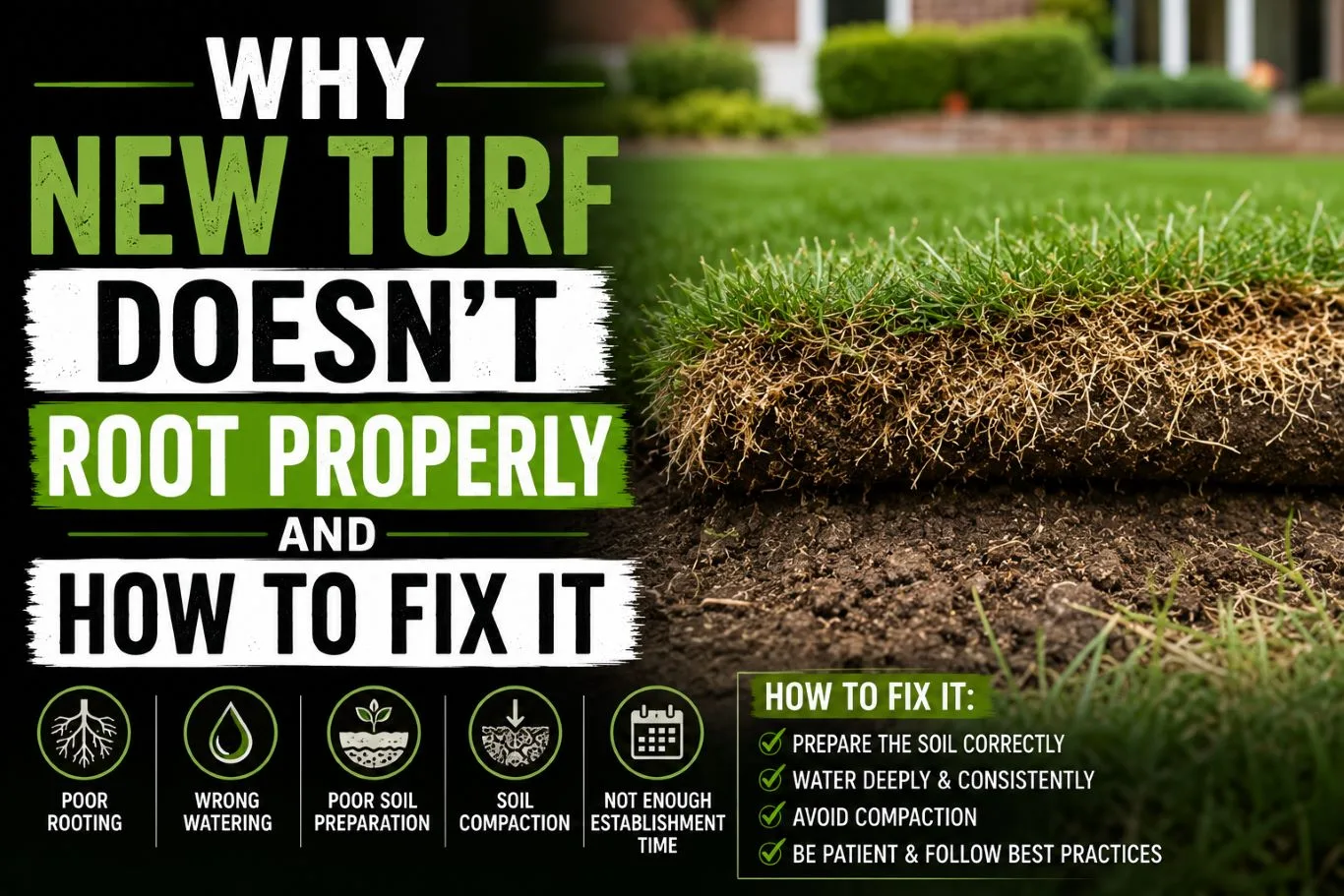
If these young roots hit an air gap, a bone-dry topsoil layer, or an impenetrable, compacted earth bed, they stop growing horizontally or simply wither away. Within days, the turf loses its ability to absorb groundwater, leading homeowners to wonder why new turf is dying as the blades turn dull brown and brittle.
Common Mechanical Causes of Root Failure
Rooting failure rarely stems from a defect in the grass itself; it is almost always caused by physical barriers created during ground preparation or initial care.
| Physical Failure Factor | Physical Impact on Grass Roll | Corrective Solution |
|---|---|---|
| Subsoil Compaction | Roots cannot penetrate surface | Rotavate to 150mm & add topsoil |
| Subterranean Air Pockets | Root tips dry out in air voids | Lightly heel-pack & roller-tamp |
| Shallow Surface Misting | Roots stay trapped in upper sod | Deeply soak topsoil base layer |
1. Severe Subsoil Compaction
In many gardens across the South East, underlying soil consists of heavy, dense clay. If you lay fresh grass rolls directly over hard, uncultivated clay without rotavating first, the tender new root hairs hit a wall that feels like concrete. Unable to push downward, the roots grow sideways between the turf mat and the ground, leaving the lawn vulnerable to drying out during the first warm afternoon.
2. Air Pockets Beneath the Turf Mat
Air pockets are silent killers of fresh grass. If the prepared ground is bumpy or uneven, or if the turf rolls are not pressed firmly into contact with the damp earth beneath, air voids form under the sod. When young root hairs emerge from the turf backing and enter an air pocket, the dry air instantly desiccates the root tips, stopping growth before the plant can anchor.
Hydration Mistakes: The Fine Line Between Soaking and Drowning
Watering management is the single most critical factor in learning how to help new turf establish. However, both under-watering and over-watering can stop root growth completely.
[ WATER PENETRATION DEPTH MATRIX ]

+-------------------+       +--------------------+       +-------------------+
| Superficial Mist  |  -->  | Proper Penetration |  -->  | Severe Waterlog   |
| (Top 5mm damp;    |       | (Soaks turf AND    |       | (Soggy, airless;  |
| roots stay shallow)|      | 50mm topsoil base) |       | roots rot away)   |
+-------------------+       +--------------------+       +-------------------+
The Pitfall of Shallow Misting
Giving your lawn a brief, five-minute sprinkle with a hose pipe every evening does more harm than good. A quick surface spray only dampens the green blades and the top few millimetres of the turf backing. Because the water never reaches the subsoil, the roots have no reason to grow downward, remaining trapped inside the shallow roll mat. Master proper watering new turf techniques by applying enough water so that it penetrates completely through the sod and soaks the top 50mm of the underlying base.
The Danger of Waterlogging
Conversely, drowning the lawn in standing water creates anaerobic (airless) soil conditions. Roots require oxygen just as much as moisture to function. If the ground remains a soggy, waterlogged marsh for several consecutive days, the young root hairs rot away, causing the foliage above to turn yellow and decay.
Step-by-Step Restoration Plan: How to Fix Non-Rooting Turf
If you suspect your recently laid lawn is failing to anchor, act quickly to correct the underlying conditions before the grass dies back permanently.
1.Inspect the Root Interface: Identify Problem Zones.
Walk your garden and gently lift the corners of rolls in yellowing or dry areas. Check whether new white root threads are visible or if the backing layer is bone-dry and sitting over an air pocket.
2.Firm and Press the Turf: Eliminate Air Voids.
If air pockets are present, walk across the turf with small, shuffling steps (heel-packing) or use a light lawn roller to press the sod into firm, seamless contact with the underlying topsoil.
3.Implement Deep Morning Irrigation: Saturate the Base.
Water the lawn thoroughly during the early morning hours between 4:00 AM and 8:00 AM. Ensure enough volume is applied to make the topsoil beneath the sod noticeably damp to the touch.
Following these steps provides immediate structural fixes, helping you build a disciplined routine for caring for newly laid turf.
Essential Aftercare Guidelines for Long-Term Success
To protect your lawn while the root network anchors firmly into the earth, follow these expert new lawn care tips:
- Delay the First Cut: Never mow fresh grass until the roots have anchored securely. Test this by gently pulling up a handful of grass blades; if the sod resists and stays anchored, it is safe to mow. Always set your mower deck to its highest clearance setting (around 50mm to 60mm) for the first few sessions.
- Keep Off the Grass: Keep children, pets, and heavy garden equipment off the lawn for at least the first 14 days. Walking across unanchored turf breaks the fragile new root hairs as they attempt to attach to the soil particles beneath.
- Avoid Early Chemical Feeding: Never apply high-nitrogen fertilizers to unrooted turf. Concentrated chemical salts draw moisture away from delicate young roots, causing severe leaf scorch and root burn.
FAQs Section
1. How many days does it take for new turf to start rooting into the ground?
Under ideal seasonal conditions with proper watering and ground preparation, young grass rolls will begin pushing fresh white root hairs into the underlying topsoil within 5 to 7 days. By day 14, the root network should be anchored strongly enough that you can no longer lift the corners of the rolls by hand.
2. Can I save turf that has turned brown and dried out due to poor rooting?
If the underlying root crowns are still pliable and damp near the soil base, the grass is likely in a protective state of dormancy and can be revived with consistent, deep early-morning watering. However, if the sod feels completely brittle, crumbles in your hand, and smells sour, that section has suffered permanent root death and will need replacing.
3. Should I use a roller on newly laid turf that isn’t sticking down?
Yes, using a light lawn roller or walking over the area with small shuffling steps can be very effective for removing air pockets and ensuring the turf backing makes direct contact with the topsoil base. Avoid using an excessively heavy industrial roller, as this can compact the subsoil and prevent roots from penetrating.
4. What specific geographical locations across Essex do your installation crews support?
We offer comprehensive delivery, professional groundwork preparation, and full installation services across the entire county of Essex and its close surrounding borders, including key residential areas like Chelmsford, Brentwood, Romford, Billericay, Colchester, and Southend-on-Sea.
5. How fast can your local team respond to an inquiry or deliver fresh turf?
Because we manage our own regional fields and transport fleets, we can typically evaluate your site measurements, provide a clear, itemised quote, and deliver fresh grass rolls or landscaping materials directly to your driveway within 24 to 48 hours.
Final Thoughts: Securing a Healthy, Deep-Rooted Lawn
At the end of the day, a lush, vibrant green garden isn’t built on luck; it relies on solid underground integration. By understanding why new turf doesn’t root properly, ensuring thorough ground preparation, eliminating air voids, and applying deep early-morning watering sessions, you give your lawn everything it needs to anchor strongly and flourish for years to come.
When you work with Turf Supplies Essex, you are partnering with reliable, affordable, and deeply trusted turf suppliers in Essex who prioritize quality and customer satisfaction above all else. Our top-quality natural grass turf rolls with delivery & installation services, including landscaping materials like topsoil & wood chippings, ensure that your garden project gets off to the best possible start. Let our family-run team manage the physical groundwork, delivery, and installation for your next renovation. Connect with us today, and enjoy a beautiful, deep-rooting green sanctuary.
Transform your garden with fresh, farm-cut grass rolls delivered straight to your home and professionally installed by our experienced Essex team :