
Quick Summary
- Deciding on the right season for laying turf determines how fast your lawn establishes roots, survives seasonal temperature swings, and handles foot traffic.
- Autumn provides warm residual ground temperatures and regular rainfall, giving roots an uninterrupted head start without the threat of scorching heat.
- Spring brings rising air temperatures and longer daylight hours, accelerating top-blade growth for quick visual results before summer gatherings.
- Ground conditions across Essex—specifically heavy clay beds—demand tailored soil decompaction and grading depending on whether you install in damp autumn or drying spring.
- Turf Supplies Essex provides top-quality natural grass turf rolls with delivery & installation services, including landscaping materials like topsoil & wood chippings, helping gardens throughout Essex, East London, and North London flourish in every planting season.
Introduction
A beautiful, verdant garden lawn provides the living foundation for your entire outdoor landscape. Whether you are recovering from major building work, refreshing worn-out patchy grass, or designing an entirely new garden layout, timing your installation correctly is the single most critical factor for success. Homeowners often ask which window provides the highest success rate when unrolling fresh grass: should you install in late September or wait for the early signs of March? The practice of laying turf can technically be undertaken at almost any point during the year provided the ground is not frozen solid or submerged under floodwater, but autumn and spring remain the two undisputed powerhouses of the UK gardening calendar. Each season offers unique biological advantages, soil moisture profiles, and weather challenges. Across our regional patch—where dense London clay beds dominate and summer dry spells test root resilience—matching your schedule to regional soil behavior is essential. As experienced providers of professional turf laying services in Essex, the specialists at Turf Supplies Essex provide top-quality natural grass turf rolls with delivery & installation services, including landscaping materials like topsoil & wood chippings, ensuring gardens across Essex, East London, and North London enjoy strong, deep-rooting lawns year-round.
Unsure whether autumn or spring is the ideal planting window for your garden soil? Tap the WhatsApp button to chat directly with our lawn experts today :
The Autumn Advantage: Nature’s Ideal Rooting Window
Professional landscapers and greenkeepers across the UK widely consider laying turf in autumn (from September through to late November) the gold standard for lawn establishment.
During early to mid-autumn, a unique environmental balance occurs: the summer sun has warmed the earth for months, leaving the soil bed pleasantly temperate, while ambient air temperatures begin to cool down.
[ AUTUMN ROOT-FOCUS CYCLE ]

+-------------------+       +-------------------+       +-------------------+
| Warm Residual     |  -->  | Regular Autumn    |  -->  | Unbroken Root     |
| Ground Base       |       | Rainfall Cycles   |       | Establishment     |
| (12°C–15°C)       |       | Minimize Hosepipe |       | Zero Heat Stress  |
+-------------------+       +-------------------+       +-------------------+
Why Autumn Works So Well:
- Subsoil Warmth: Even as October brings crisper air, soil temperatures remain high enough to stimulate vigorous root division. The plant channels all its stored carbohydrates downward into building an anchor network rather than wasting energy pushing upward foliage.
- Natural Rainfall: Autumn rainfall takes the burden off manual irrigation. Nature keeps the turf backing continuously damp, significantly lowering the risk of rolls drying out or shrinking at the seams.
- Minimal Weed Competition: Most annual weed seeds go dormant as daylight hours dwindle, allowing your grass to knit seamlessly into the topsoil without aggressive broadleaf competitors choking out the sward.
The Spring Alternative: Fast Visual Greenery for Summer
While autumn takes the crown for root development, laying turf in spring (from March through to early May) remains an immensely popular choice for homeowners who want their gardens ready for outdoor summer entertaining.
As winter frost subsides, lengthening daylight hours and rising spring temperatures prompt grass into an active metabolic surge.
| Seasonal Parameter | Autumn Installation | Spring Installation |
|---|---|---|
| Soil Temperature | High (Residual summer warmth) | Low to Moderate (Gradually rising) |
| Primary Growth Focus | Subterranean root depth | Vertical leaf blade shoot growth |
| Natural Irrigation | High (Frequent, reliable rain) | Variable (Prone to dry spells) |
| Summer Readiness | 100% Established & drought-proof | Semi-established; needs watering |
| Weed Pressure | Very Low (Dormant seeds) | Moderate to High (Germinating) |
Why Spring Appeals to Homeowners:
- Fast Foliage Growth: Rising soil warmth triggers rapid blade growth, rewarding you with an instant, bright emerald carpet within 10 to 14 days.
- Early Summer Utility: If you install in late March or April, your lawn will generally be settled and ready for light family foot traffic, garden barbecues, and children playing by June.
- Longer Work Days: Milder, dry spring afternoons offer practical conditions for undertaking heavy ground clearing, rotavating, and raking without fighting autumn mud.
Head-to-Head Comparison: Autumn vs Spring
To determine the best time to lay turf for your specific property, consider how the seasonal trade-offs fit your garden timeline and your willingness to manage daily irrigation:
| AUTUMN CHALLENGES | SPRING CHALLENGES |
|---|---|
| – Heavy leaf fall needs clearing | – Sudden April/May dry spells |
| – Soil can become waterlogged clay | – Demands strict daily watering |
| – Reduced sunlight for winter | – Vulnerable to early summer heatwaves |
If your property has poor natural drainage or dense clay, autumn requires careful timing to finish laying before heavy winter deluges waterlog the ground. Conversely, a spring lawn demands disciplined watering habits; if a sudden warm, dry spell hits in May before root systems have tunneled deep into the subsoil, spring-laid grass rolls can dry out, shrink, and brown within forty-eight hours.
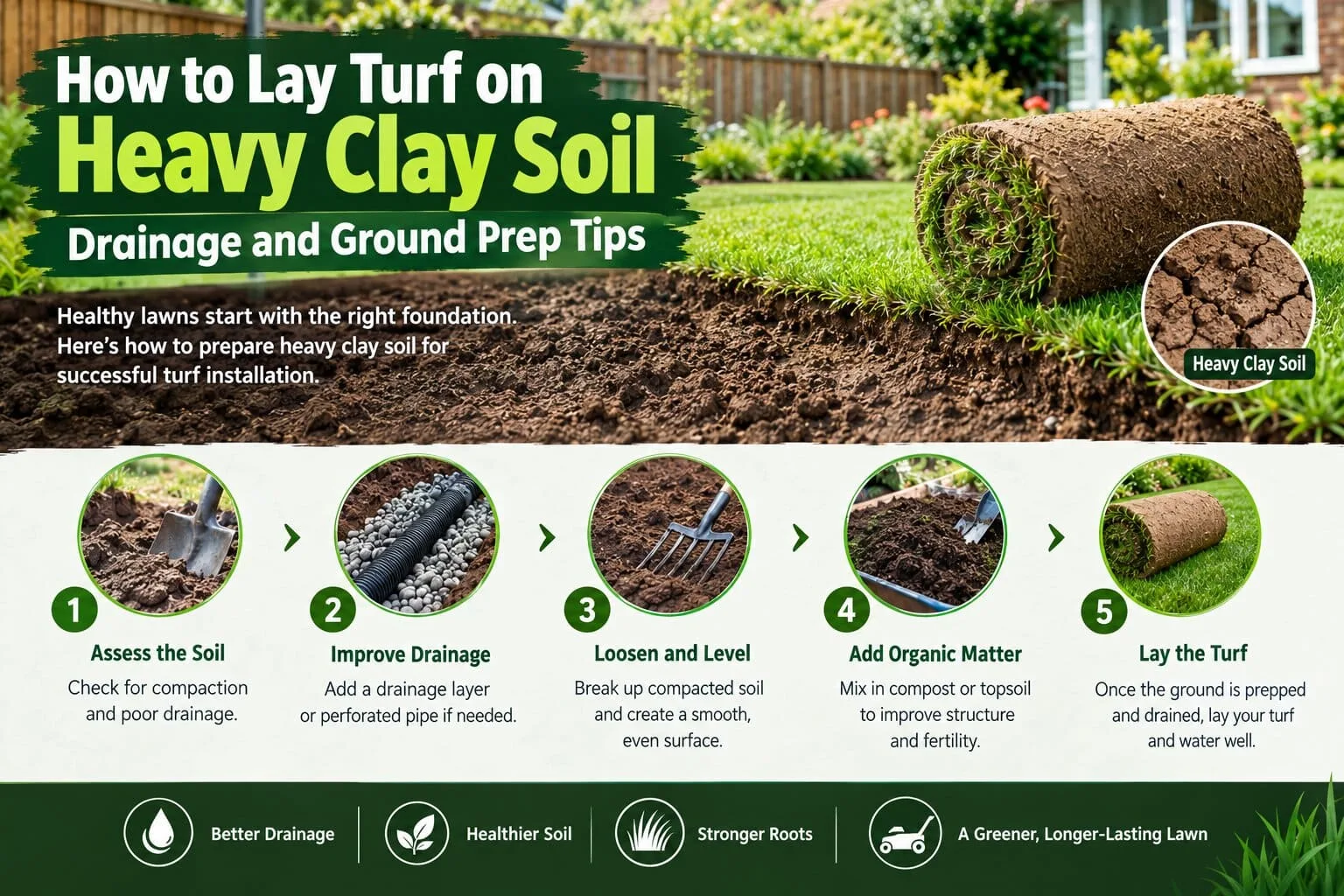
Ground Preparation: The Universal Rule Regardless of Season
Regardless of the month you choose, your new lawn will only ever be as good as the ground underneath it. Cutting corners on turf preparation is the number one reason installations fail across the South East.
Before any rolls arrive on your driveway, follow this proven structural workflow:
1. Decompact Subsoil Base: Depth: 150mm.
Rotavate or spade the existing site to a depth of 150mm. Break up hard-baked clay clods, remove stubborn perennial weed roots, and clear out large stones, flints, and builder’s rubble.
2. Incorporate Screened Topsoil: Depth: 25mm–50mm.
Spread a uniform 25mm to 50mm layer of BS3882 certified, 10mm agricultural screened topsoil across the bed to introduce clean organic matter and provide an open tilth for roots.
3. Heel-Pack and Rake Level: Consolidation.
Tread down the entire area using small, overlapping shuffling steps to press out subterranean air pockets. Finish with a wide landscaping rake to achieve a flat, table-top plane.
Practical Installation Steps: How to Lay Fresh Turf
Knowing how to lay turf properly protects your physical investment and guarantees straight, seamless finishes across your garden:
- Stagger Roll Joints: Lay your grass rolls in a staggered brickwork formation. This prevents continuous seam lines, which reduces runoff and ensures uniform moisture distribution.
- Work Off Laying Boards: Always place scaffolding boards or thick plywood sheets over freshly unrolled grass when moving across the site. This spreads your body weight evenly and stops deep footprints from indenting the freshly raked soil underneath.
- Butt Edges Firmly: Push roll edges closely against each other without stretching the sod. Stretched rolls contract as they settle, leaving unsightly gaps that expose delicate root hairs to drying winds.
- Soak Immediately: Begin irrigating the lawn within an hour of installation. Water until the sod backing is completely saturated and moisture penetrates 50mm into the underlying topsoil base.
For complex garden layouts, sloping banks, or large plots, calling in vetted turf installation services in Essex eliminates the physical strain and guarantees clean borders and level joints from day one.
FAQs Section
1. Can I still lay turf during late autumn or early winter in November and December?
Yes, provided the ground is not frozen solid and not waterlogged from heavy storms. Grass roots continue growing slowly whenever soil temperatures stay above 5°C. Turf laid in late autumn requires minimal watering, though top growth will remain dormant until the warmth of early spring arrives.
2. How often do I need to water spring-laid turf compared to autumn-laid turf?
Spring-laid turf typically requires thorough watering every morning for the first 14 days, especially during bright, breezy spells that pull moisture from soil quickly. In contrast, autumn turf often only needs supplementary watering for the first week or two, after which seasonal rainfall naturally maintains the required soil moisture.
3. When should I perform the first lawn cut for each season?
For spring installations, grass begins growing rapidly within 10 to 14 days; perform the first high-clearance trim (50mm–60mm) once the grass passes the gentle “tug test” and resists lifting. For autumn installations, you may only need one light trim before winter sets in to tidy up leaf tips, followed by your main seasonal mowing schedule beginning the following March.
4. Which specific locations across Essex and London do your delivery and installation teams cover?
We offer prompt delivery, ground leveling, and installation services across the entire county of Essex, East London, and North London, regularly serving Chelmsford, Brentwood, Romford, Chigwell, Epping, Enfield, and surrounding communities.
5. How quickly can your team deliver fresh-cut grass rolls and bulk topsoil bags?
Because we coordinate directly with regional turf farms and maintain our own specialized vehicle fleet, we typically process orders, inspect garden access requirements, and deliver fresh natural grass rolls and 1-ton topsoil bulk bags within 24 to 48 hours of order confirmation.
Final Thoughts: Choosing the Perfect Timing for Your Lawn
Deciding between autumn and spring ultimately comes down to your garden priorities. If your primary goal is building the deepest, strongest, most drought-resilient root system with minimal watering effort, laying turf in autumn is the clear winner. If you are preparing your home for summer living and want fast visual gratification, a carefully managed spring installation provides a lush, vibrant green space ready for the sunny months ahead.
Whichever season suits your project, working with Turf Supplies Essex guarantees your garden gets off to a flying start. As a dependable provider of professional turf laying services in Essex, we supply top-quality natural grass turf rolls with delivery & installation services, including landscaping materials like topsoil & wood chippings, to homeowners and trade professionals throughout Essex, East London, and North London. Let our family-run team take care of your site preparation, leveling, and professional installation. Connect with us today, and enjoy a lush, deep-rooting lawn through every season.