Quick Summary
- Discovering new turf turning yellow within days of installation is a common issue that is usually fully reversible if addressed quickly.
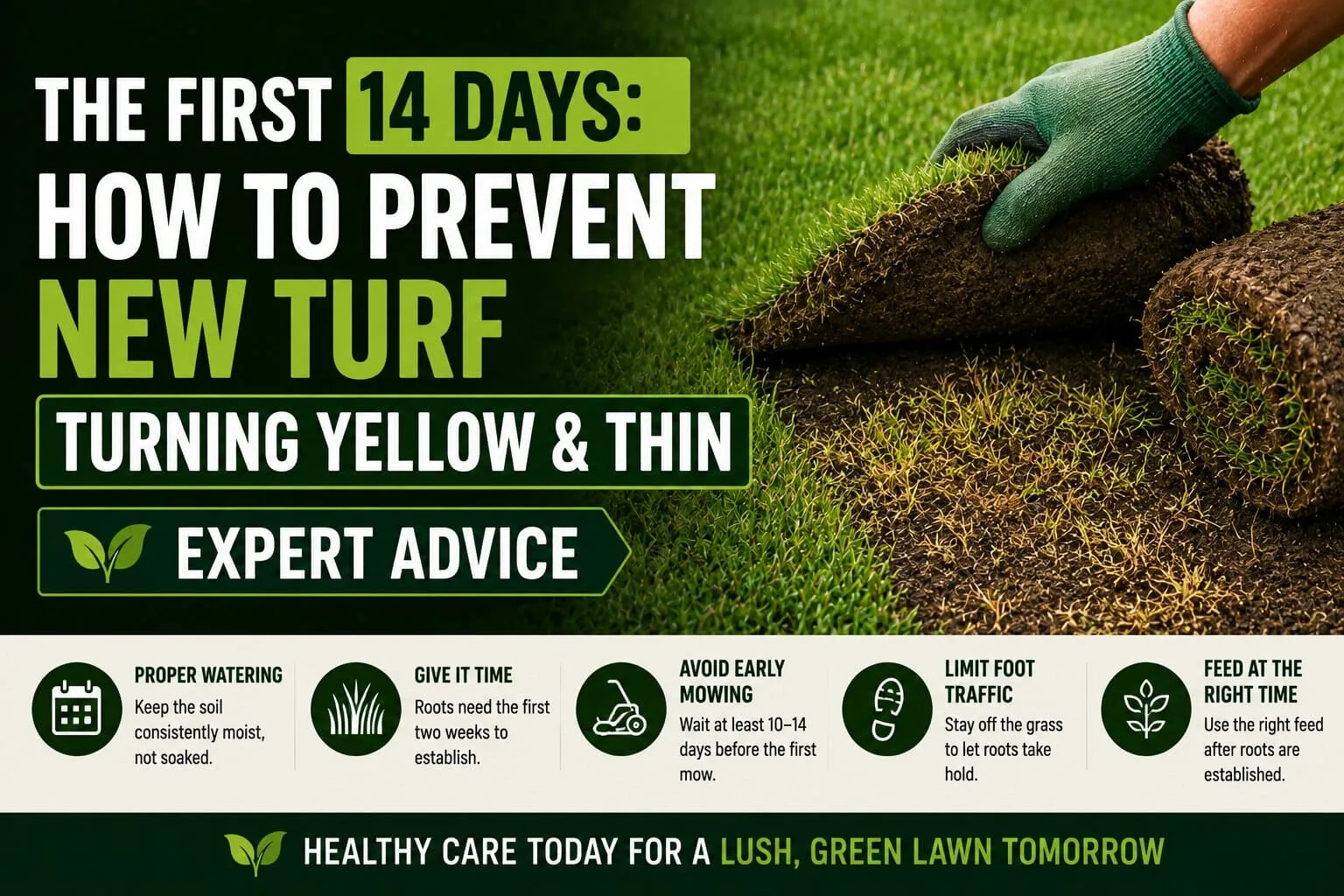
- The first fortnight represents the most critical rooting window where moisture balance dictates whether grass thrives or fails.
- Distinguishing between moisture stress, trapped heat, and poor soil contact allows you to apply the exact corrective treatment immediately.
- Establishing an optimal root bed using properly screened, nutrient-rich topsoil prevents waterlogging and poor root penetration.
- Following a disciplined aftercare plan ensures your fresh rolls establish deep roots, knit cleanly, and stay vibrant green.
Introduction
Few garden sights are more disheartening than investing time, effort, and money into a brand-new lawn only to look out a few days later and notice your fresh rolls losing their deep emerald colour. Seeing new turf turning yellow is surprisingly common, yet it sends many homeowners into an immediate panic. The first two weeks following delivery and installation are the most vulnerable period in a lawn’s life cycle.
When troubleshooting issues like new turf turning yellow in Essex, identifying the underlying environmental or groundwork causes quickly is the key to nursing the grass back to full vitality. Local homeowners and landscaping professionals regularly trust Turf Supplies Essex for fresh lawn turf and high-grade growing media, including rich Agriculture Screened Premium Grade Top Soil, understanding that quality groundwork is the greatest defence against early lawn discolouration.
Need fresh, top-quality natural turf? WhatsApp us today for expert advice and availability :
What Happens During the First 14 Days
To understand why grass blades lose colour, it helps to appreciate what fresh turf goes through during harvesting and transplanting. When turf is harvested at the turf farm, specialised equipment slices through the top layer of earth, severing a substantial portion of the mature root system so the rolls can be lifted and transported.
Once laid on your garden soil, the grass undergoes natural transplant stress. The turf relies entirely on its remaining shallow root base to draw moisture and nutrients from your garden bed. Over the initial 14 days, the turf must push out fine, white feeder roots that penetrate downwards into the sub-base. If these young roots encounter extreme dryness, saturated standing water, or poor soil contact, chlorophyll production drops rapidly, leaving the grass blades pale, yellow, or thinning.
Diagnosing Why New Turf Discolours
Discolouration is the lawn’s distress signal, but it can stem from several distinct causes. Understanding the physical symptoms helps you choose the right fix rather than guessing.
1. The Hydration Imbalance: Too Much or Too Little Water
Watering errors account for the vast majority of yellowing lawns during the establishment phase.
When turf is deprived of water, the blades roll inwards, lose their elasticity, and take on a dull, straw-like hue. These clear underwatered new turf signs appear first along the edges and joins of the rolls, where moisture evaporates fastest in warm breezes or direct sunlight.
Conversely, giving your garden excessive water is equally dangerous. When homeowners overcompensate, overwatering new turf yellow becomes a serious risk. Saturated, soggy ground fills all natural soil pores with water, squeezing out vital oxygen. Without oxygen, roots suffocate, begin to rot, and turn a limp, sickly yellow colour.
2. Air Pockets and Poor Ground Contact
If the soil underneath your turf was not firmed down and levelled evenly before installation, small hollows and voids remain trapped beneath the turf mat. Where the turf backing hangs in mid-air without touching damp earth, the roots cannot draw moisture. This results in isolated, irregular yellow patches in new lawn areas while surrounding sections remain green.
3. Pallet Heat Stress
Turf is harvested as a living, respirating organism. If rolls remain stacked tightly on a pallet for more than 24 hours—especially in warm weather—the core of the pallet builds up intense internal heat. If rolls were stressed before being laid, you may notice new turf turning brown and yellow within forty-eight hours of installation.
Step-by-Step Prevention Strategy for the First Fortnight
Preventing discolouration requires a methodical, proactive routine from the moment the rolls touch the ground.
Days 1 to 3: The Critical Initial Soaking
- Immediately after laying, give the entire lawn a thorough, deep soaking.
- Ensure the water penetrates right through the turf backing and at least 50mm to 75mm into the prepared topsoil beneath.
- Check moisture depth by gently lifting an edge roll in two or three different spots across the garden.
- The soil underneath should feel moist and sponge-like, never dry and powdery, nor like standing mud soup.
Days 4 to 7: Consistent Moisture Maintenance
- Water in the early morning before the sun heats the ground, reducing evaporation and fungal risks.
- During warm or breezy spells, provide a second lighter watering in the late afternoon.
- Walk along the edges and perimeter boundaries, as perimeter turf dries out significantly faster than central rolls.
Days 8 to 11: The Gentle Tug Test
- By the second week, fine white root filaments should begin anchoring into your prepared soil.
- Test establishment by taking a small pinch of grass blades and pulling upwards gently.
- If you feel firm resistance, the roots are successfully knitting.
- Once resistance is felt, you can begin reducing watering frequency slightly while maintaining deep, thorough soaks that encourage roots to search downward.
Days 12 to 14: Preparing for the First Cut
- Allow the surface soil to dry out slightly on day 13 so your lawn mower does not leave heavy ruts in soft ground.
- Ensure the grass has reached approximately 60mm to 75mm in height before attempting a trim.
- Set your mower blades to the highest possible setting, removing no more than the top third of the blade to avoid shocking the young plants.
The Role of High-Grade Soil in Preventing Yellow Lawns
A lush, deep green lawn is only ever as healthy as the earth sitting beneath it. Laying premium turf over tired, stony, or compacted ground is one of the most common reasons why grass struggles to establish and loses colour.
To give fresh turf the ideal rooting environment, incorporating 10mm Agriculture Screened Premium Grade Top Soil – 1 Ton Bag provides an exceptional, free-draining sandy loam base. Screened to 10mm, this grade eliminates large stones, debris, and stubborn root fragments, giving delicate new turf roots an open, aerated foundation. It delivers the balanced drainage needed to prevent waterlogging during rainy spells while retaining essential moisture and trace minerals that keep grass blades vibrant and nourished.
Managing ground quality and moisture retention is particularly vital when tackling new turf turning yellow for the UK gardens, where unpredictable shifts between wet spells and sudden heat waves can stress newly laid lawns.
How to Revive a Yellowing Lawn Step by Step
If your new lawn has already started to develop a pale or yellow tint, follow this structured rescue plan to restore its natural colour:
Step 1: Perform the Sub-Base Check
Lift the corner of an affected roll carefully. Check whether the earth beneath is dry and crumbly or waterlogged and foul-smelling. If it is dry, increase watering duration immediately. If it is saturated, suspend watering for 24 to 48 hours to allow oxygen to re-enter the soil.
Step 2: Eliminate Air Voids
If yellowing is confined to specific spots, walk gently across those sections using flat footwear or a smooth board to press the turf backing firmly into the soil below, removing any trapped air pockets.
Step 3: Top-Dress Exposed Seams
If gaps have appeared between rolls due to slight shrinkage, brush a light blend of screened sandy topsoil directly into the joints. This protects the exposed edges from drying winds and helps the rolls knit together seamlessly.
Step 4: Avoid Premature Chemical Fertilising
Never apply concentrated chemical granular fertilisers to yellowing, newly laid turf. Stressed young root hairs are easily burned by heavy synthetic salts. Allow the root system to establish naturally in quality soil before applying gentle lawn feeds.
Frequently Asked Questions
1. Will yellow new turf turn green again?
Yes. In the vast majority of cases, yellowing turf recovers its vibrant green colour within 7 to 14 days once correct watering and firm soil contact are restored, provided the root crown remains alive and intact.
2. How often should I water new turf in warm weather?
During warm or windy conditions, new turf generally requires watering twice daily—once in the early morning and once in the late afternoon. The goal is to keep both the turf backing and underlying topsoil consistently damp without creating stagnant puddles.
3. How quickly can Turf Supplies Essex deliver topsoil and turf orders?
Turf Supplies Essex offers rapid, reliable delivery across the county, with most orders dispatched within 24 to 48 hours. This ensures that lawn turf is freshly cut and delivered immediately to your site, minimising pallet stress and reducing the chance of post-delivery yellowing.
4. Which areas are covered for turf and soil deliveries?
Comprehensive delivery and installation services cover Epping, Brentwood, Chelmsford, Colchester, Southend-on-Sea, Loughton, Harlow, Basildon, and surrounding districts. Products can be delivered in bulk bags or palletised quantities with convenient offloading.
5. Can walking on the lawn during the first fortnight make it turn yellow?
Yes. Heavy foot traffic on wet, establishing turf compresses the soft ground beneath, crushing delicate new root hairs and pushing out essential soil air pockets. This localised compaction stops water and nutrients from reaching the blades, resulting in pale, thinning patches.
Final Thoughts & Next Steps
Experiencing discolouration during the first fortnight can feel stressful, but understanding the biological needs of your grass makes troubleshooting straightforward. By keeping moisture levels balanced, checking for firm root-to-soil contact, and avoiding early chemical stress, you can easily prevent new turf turning yellow and enjoy a lush, hard-wearing lawn for years to come.
Whether you are preparing a garden overhaul or searching for lawn turf laying near me, using freshly harvested, high-grade turf rolls ensures the fastest possible establishment. If your existing soil lacks structure or depth, sourcing clean material from dependable topsoil suppliers near me provides the nutrient-rich base your lawn requires. For long-term seasonal health, pairing proper installation with professional lawn care services near me guarantees your garden stays weed-free, thick, and resilient.
For homeowners resolving lawn establishment challenges or seeking advice on new turf turning yellow in Essex, Turf Supplies Essex provides dependable, affordable, and professional local service. From freshly harvested lawn turf and garden supplies to nutrient-rich Agriculture Screened Premium Grade Top Soil, having the right materials and expert local guidance ensures your garden renovation succeeds seamlessly.
Ready for a greener lawn? Get your free quote for premium natural turf, delivery and installation :