Quick Summary
- Effective lawn moss removal requires a gentle, balanced strategy that lifts unwanted moss without ripping up delicate living grass roots.
- Moss is a symptom of underlying lawn problems such as low light, waterlogged soil, low soil pH, and heavy surface thatch.
- Using targeted moss treatments to blacken growth before raking makes mechanical extraction significantly easier and less destructive.
- Ongoing preventative habits—including seasonal aeration, correct mowing heights, and overseeding—stop moss spores from returning.
- Choosing resilient, shade-adapted grass varieties permanently cures chronic moss problems in low-light and sheltered garden spots.
Walking across your lawn in late winter or early spring only to feel a damp, squelchy sponge underfoot is an all-too-familiar experience for British homeowners. Moss is opportunistic, thriving during wet, overcast spells when grass growth slows down. Tackling lawn moss removal does not require aggressive scraping that leaves your garden looking like a ploughed field. When approaching lawn moss removal in Essex, the key is to address the underlying growing conditions while using gentle, measured techniques to protect living turf.
Local gardeners and landscape contractors regularly turn to Turf Supplies Essex for premium lawn turf, nutrient-dense topsoil, and specialist varieties like Shade Master Turf, knowing that sustainable lawn health starts with reliable local expertise and high-quality materials.
Tired of a spongy, moss-covered garden? Message us on WhatsApp now for a free quote on fresh topsoil and shade-tolerant turf.
Understanding Why Moss Invades Your Lawn
Before grabbing a rake or spraying chemicals, it helps to understand why moss appears in the first place. Moss does not possess true roots; instead, it anchors itself with tiny hair-like structures called rhizoids and draws moisture and nutrients directly through its leaves.
Moss cannot easily outcompete healthy, vigorously growing grass. It only takes hold when grass plants become stressed or thin out.
The primary triggers for lawn moss include:
- Excess Moisture and Poor Drainage: Persistent dampness and surface water create an ideal habitat for moss spores to germinate.
- Shade and Low Light: Dense tree canopies, high boundary fences, and north-facing walls block sunlight, weakening traditional sun-loving turf grasses.
- Soil Compaction: Heavy foot traffic packs soil particles tightly together, depriving roots of oxygen and slowing natural water percolation.
- Low Soil Fertility and Acidity: Acidic soils with poor nutrient levels inhibit grass growth while allowing hardy mosses to flourish unchecked.
- Scalping the Lawn: Cutting the grass too short weakens the plants and opens up bare soil patches that moss rapidly colonises.
Understanding these factors makes it easier to work out how to get rid of moss in lawn areas permanently rather than temporarily scraping away surface growth every spring.
Gentle Moss Removal: The Step-by-Step Method
Ripping violently into live turf with heavy machinery often tears up healthy root crowns, resulting in massive bare patches that invite weeds. A disciplined, two-stage strategy—treating first, then gently extracting—delivers far cleaner results.
Step 1: Apply a Targeted Treatment
Applying a treatment before mechanical raking weakens the moss’s grip on the soil. The best lawn moss killer formulations typically rely on mineral compounds that dehydrate the moss plant without harming surrounding turf blades.
Using iron sulphate for lawn moss remains the industry standard across the UK. Iron sulphate acts rapidly, turning vibrant green moss into a dry, blackened, brittle material within 7 to 14 days. It also gives surrounding grass a rich, dark emerald colour and slightly acidifies the surface layer, which moss dislikes.
For gardeners seeking chemical-free alternatives, applying a natural moss removal for grass solution—such as diluted organic liquid seaweed feeds or potassium-based bacterial moss treatments—gradually breaks down moss cell walls through biological activity.
Step 2: Timing Your Spring Clean
Plan your primary lawn work around your spring lawn moss treatment schedule. Late March to late April is ideal, as soil temperatures rise above 8°C and grass enters its natural growth phase. Performing treatments during an active growth window ensures the turf recovers quickly and fills in any minor voids left behind.
Step 3: Gentle Extraction
Once the moss has turned dark brown or black, it is ready for gentle removal.
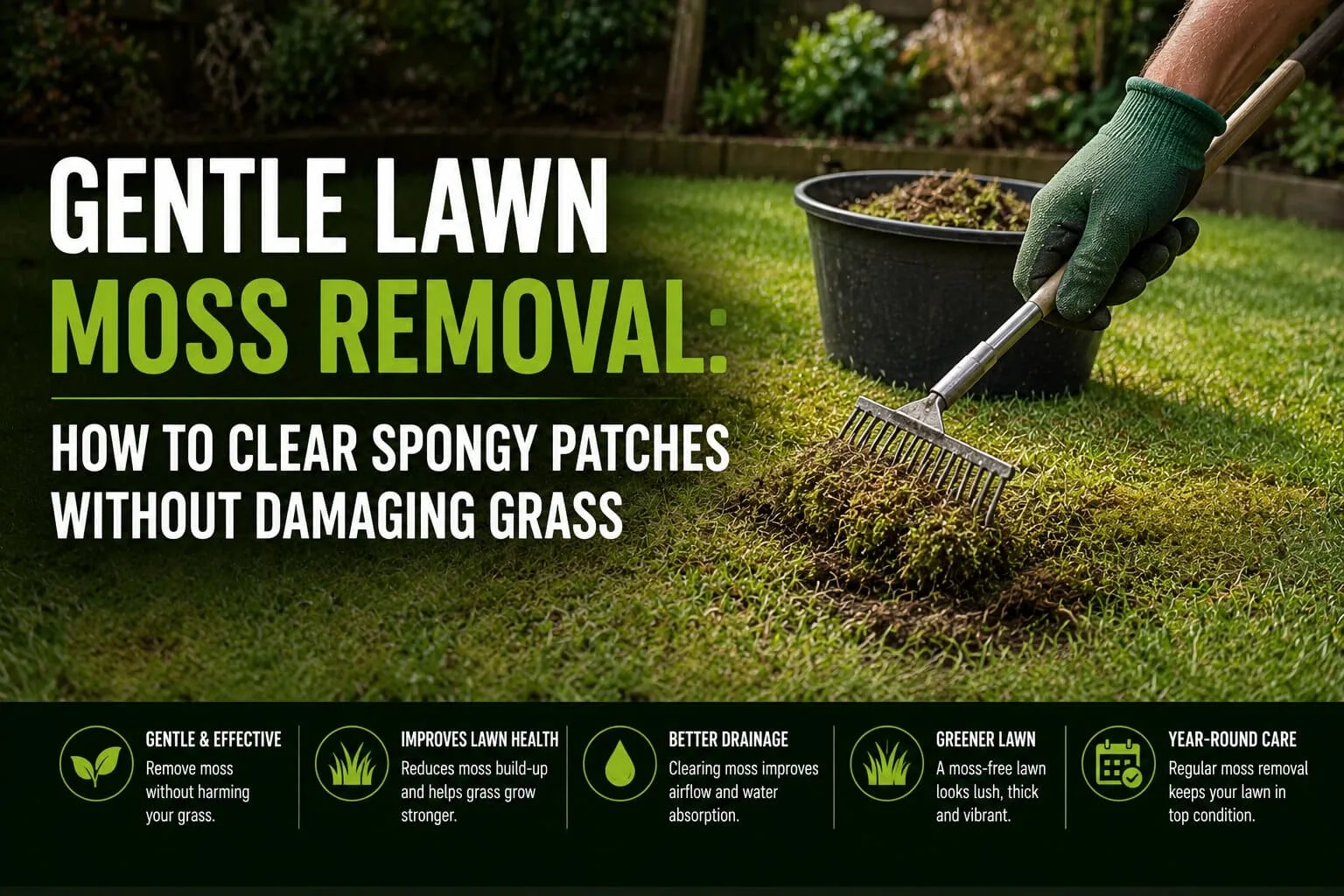
- For Small Gardens and Light Infestations: A flexible, wire-tined lawn moss removal rake is the gentlest tool available. Sweep the tines through the turf with light, rhythmic strokes, lifting the brittle moss out like combing hair rather than digging into the soil.
- For Larger Lawns and Heavy Sponginess: When dealing with deep thatch, scarifying lawn for moss using a powered scarifier or lawn raker fitted with spring tines is more efficient. Set the machine to its highest setting so the tines only flick the surface moss, avoiding deep slicing into the soil.
Fixing the Root Causes to Prevent Moss Returning
Extracting dead moss is only half the battle. If you do not change the environment that encouraged the moss, new spores will settle and recolonise within months.
To permanently prevent moss in lawn surfaces, adopt these vital cultural practices:
Aerate the Ground to Improve Drainage
Spiking your lawn with a garden fork or hollow-tine aerator relieves compaction and creates vertical drainage channels. This allows standing surface water to drain down into the subsoil, drying out the surface layer where moss likes to sit.
Raise Your Mower Cutting Height
Never cut your grass lower than 40mm to 50mm during spring and autumn. Longer grass blades cast natural shade over the soil surface, blocking sunlight from reaching tiny moss spores and encouraging a deeper root system.
Top-Dress and Overseed
After removing moss, thin patches must be filled immediately. Scatter a quality grass seed mix over the bare ground and brush a thin layer of fine, screened topsoil across the surface. This ensures fresh grass takes over before moss spores have a chance to settle.
Applying these steps makes lawn moss removal UK gardens require a predictable, straightforward annual task that leaves turf thick, durable, and resilient.
Resolving Chronic Shade Issues with the Right Turf
If moss continually returns in the same shaded corners or beneath mature trees, the issue is not your maintenance routine—it is the grass species. Standard ryegrass lawns need plenty of direct sunlight to thrive and will naturally thin out in low-light spots, leaving the ground open to moss.
The long-term solution is to introduce shade-tolerant cultivars specifically bred to handle low light and damp ground. Shade Master Turf is cultivated using selected fine fescues and specialized shade-tolerant grass varieties. These grasses maintain dense leaf coverage in reduced light, establishing a tight root mat that physically locks out moss and prevents spongy build-up throughout damp autumn and winter months.
Seasonal Lawn Moss Care Calendar
Maintaining a moss-free lawn requires consistent attention across all four seasons:
- Early Spring (March – April): Apply iron sulphate or organic treatments, gently rake out blackened moss, aerate compacted zones, and overseed bare patches.
- Late Spring & Summer (May – August): Maintain higher mowing heights, water deeply during dry spells, and apply a balanced summer fertiliser to keep grass dense.
- Autumn (September – October): Perform a light autumn scarification, hollow-tine high-traffic paths, and apply a low-nitrogen, high-potassium autumn feed to strengthen root cell walls before winter.
- Winter (November – February): Clear fallen leaves regularly to maximise sunlight exposure, avoid walking on frozen or saturated turf, and ensure surface water drains freely.
Frequently Asked Questions
Can I rake out green, living moss without treating it first?
Raking green, living moss is not recommended. Vigorous raking breaks live moss into thousands of microscopic fragments and scatters spores across the entire lawn, often worsening the infestation. Always apply a treatment to blacken and kill the moss before raking.
How soon can I mow the lawn after applying moss killer?
Wait at least 3 to 5 days after applying a moss treatment before mowing your lawn. This allows the active ingredients to absorb fully into the moss tissue without being disturbed or vacuumed up by your mower.
What are your typical delivery response times across Essex?
Turf Supplies Essex provides prompt delivery throughout the week. Turf and topsoil orders are harvested fresh and typically dispatched within 24 to 48 hours directly to your property, ensuring materials arrive in prime condition for installation or repair.
Which areas in Essex and nearby regions do you cover?
Full delivery services cover Epping, Brentwood, Chelmsford, Colchester, Southend-on-Sea, Loughton, Harlow, Basildon, and surrounding East London borders. Customers can order turf rolls, bulk bags of topsoil, and specialty lawn products with convenient offloading.
Is iron sulphate safe for pets and children?
Keep children and pets off the treated lawn until the spray or granules have been fully watered in and the grass blades are completely dry. Iron sulphate can also cause brown rust stains on concrete, sandstone patios, and timber decking, so brush any stray granules off hard surfaces immediately.
Final Thoughts & Next Steps
Restoring a spongy, moss-ridden lawn does not require aggressive, destructive measures. By identifying moisture and shade issues, treating moss before raking, and keeping the grass well-fed and aerated, you can enjoy a thick, springy carpet of green that naturally resists moss year after year.
If you are dealing with widespread moss infestation or looking for lawn moss removal near me, investing in fresh seed and screened topsoil helps speed up recovery. For large gardens or severely compacted lawns, hiring trusted professional moss removal near me ensures deep thatch and moss are removed with professional scarification equipment. If you need help with ongoing garden upkeep and mowing, finding an experienced gardener for lawn care near me keeps your turf in peak condition throughout the seasons.
For homeowners managing low-light spaces or planning lawn moss removal in Essex, Turf Supplies Essex provides reliable, affordable, and professional local service. From freshly harvested lawn turf and screened topsoil to hardwearing Shade Master Turf cultivated to thrive in damp, shaded borders, getting expert local support makes garden transformations easy and long-lasting.