
Quick Summary
- Understanding why does new turf shrink in hot weather is essential for preventing structural gaps, root desiccation, and patchy lawn failure.
- Turf shrinkage is caused by rapid moisture loss from the soil backing layer when exposed to intense heat and wind.
- Proper installation techniques, such as tightly staggering joints and top-dressing seams with sandy loam, provide physical protection against drying out.
- Impeccable irrigation timing during the initial two-week rooting window is vital to ensure long-term stability.
- Turf Supplies Essex offers premium natural grass turf rolls with delivery & installation services, cut fresh from high-grade regional fields to minimize establishment issues.
Introduction
Transforming a tired, uneven garden with a fresh, vibrant lawn is one of the most rewarding home improvements you can make. However, undertaking this project during the peak summer months brings unique environmental challenges. One of the most common and frustrating structural issues homeowners encounter during a warm spell is watching their neatly laid green strips pull away from each other, leaving ugly, exposed brown gaps across the garden. Seeing a newly installed landscape change so rapidly can be alarming. Understanding why does new turf shrink in hot weather is the first step toward safeguarding your investment and ensuring the young grass anchors successfully into your topsoil layer. In our region, where summer sun can quickly bake exposed soil into a hard crust, proper installation and early care make all the difference. At Turf Supplies Essex, we provide top-quality natural grass turf rolls with delivery & installation services across the region, ensuring local properties get the perfect start with premium, healthy material.
Ready to install a premium summer lawn that naturally resists drying out and shrinking? Message us on WhatsApp now for professional hot-weather care advice or a free quote.
The Science of Turf Shrinkage
To fix this seasonal problem, it helps to look at the physical composition of a harvested roll of grass. Turf is not just a collection of green leaves; it is a living, breathing structural mat made of interconnected plant stems, root hairs, and a shallow backing layer of field soil.
When grass rolls are harvested from commercial fields, their root systems are mechanically sliced. This leaves the grass highly dependent on human irrigation until it can grow new roots down into your garden.
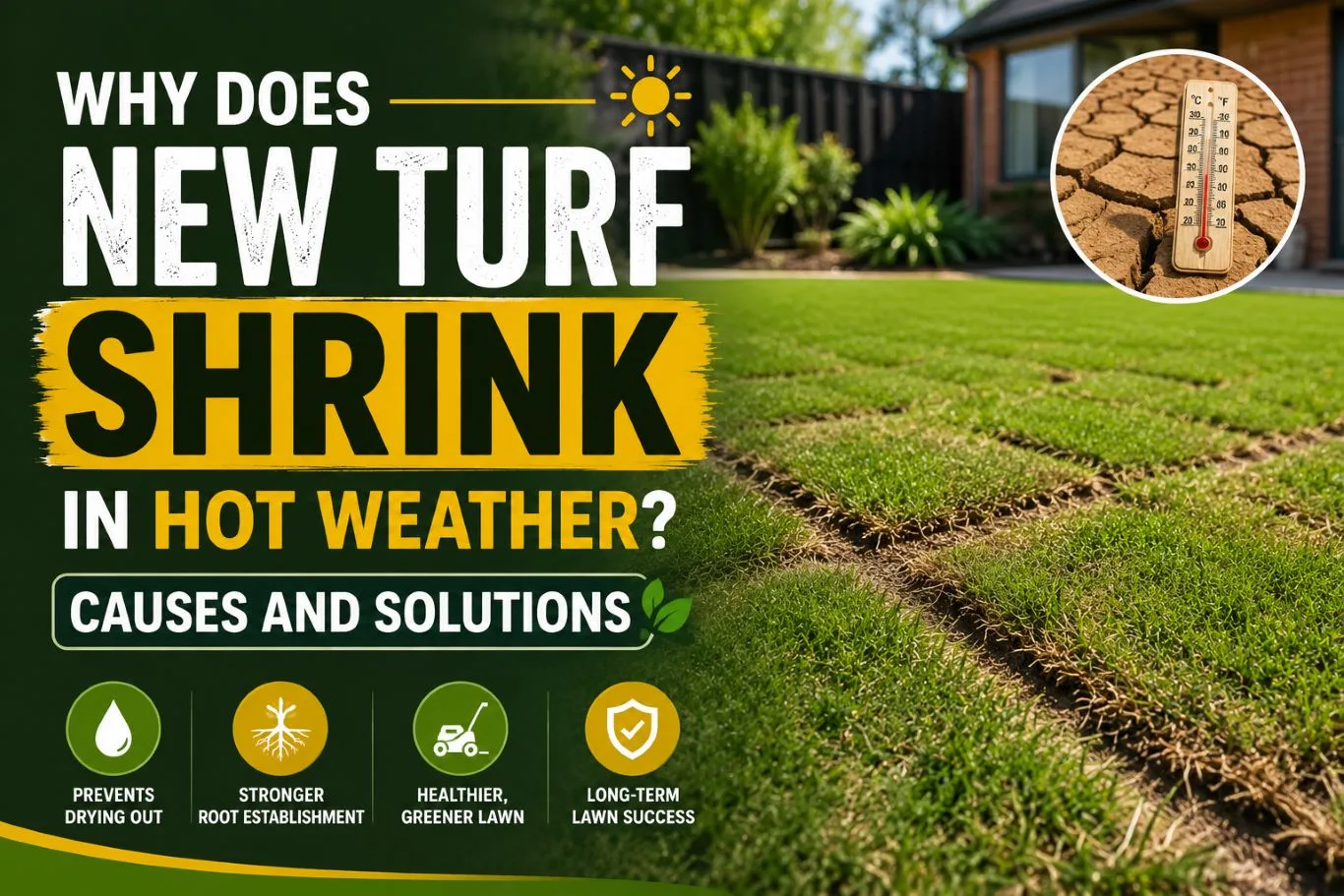
If the rolls face high heat, direct sunlight, or drying winds without enough water, the moisture inside the thin soil backing evaporates almost instantly. As this backing dries out, it naturally contracts and tightens horizontally. Because the ends of the rolls are not yet anchored down into your topsoil, the entire strip pulls inward, resulting in prominent gaps along the seams.
The Quality Factor: Why Harvest Freshness Matters
Not all grass rolls are grown to the same standards, and their structural durability depends heavily on how they are handled before arriving at your property. Many landscape issues stem from using cheap utility rolls sold at major retail DIY stores. These rolls often spend days stacked on transit pallets within national distribution networks, causing the soil backing to dry out and heat up before they are even laid.
When you invest in premium materials, these risks drop significantly. All product varieties grown and supplied by Turf Supplies Essex are of top-quality, grown on dense regional fields that naturally resist shifting, tearing, or showing any structural issues in any kind of weather conditions. Sourcing your turf fresh from a regional specialist means the material arrives at your home highly hydrated and perfectly primed to take root quickly.
Looking to buy top-quality natural grass turf rolls in Essex?
Preventative Action: Smart Preparation and Laying Techniques
Fixing gaps after your turf has dried out is difficult and time-consuming. The most efficient strategy is preventing the shrinkage from happening in the first place by using correct installation methods during the warmer months.
| Installation Phase | High-Risk Mistake | Professional Preventative Technique |
|---|---|---|
| Groundwork Preparation | Laying turf onto bone-dry topsoil | Saturate the ground thoroughly beforehand |
| Seam Integration | Aligning joints side-by-side | Stagger the rolls in a brickwork pattern |
| Edge Configuration | Stretching the rolls to fit gaps | Butt edges tightly with slight pressure |
1. Pre-Hydrate the Topsoil Base
Never lay fresh grass onto a hot, dry earth bed. A dry subsoil works like a sponge, drawing out what little moisture remains inside the turf backing layer. Always rotavate, level, and thoroughly soak your base soil the evening before your delivery arrives to create a cool, damp foundation.
2. Implement the Staggered Brickwork Pattern
When laying new turf in summer, you must avoid creating continuous linear seams across the garden. Always stagger the rolls in a classic brickwork bond, ensuring that the short end joints of adjacent rows never line up next to each other. This structural layout helps distribute physical tension evenly across the lawn, minimizing the risk of wide gaps opening up.
3. Avoid Stretching the Turf Strips
When placing the rolls, butt the edges together as tightly as possible, applying slight horizontal pressure to compress the seams slightly without overlapping. Never stretch or pull the turf to make it reach a border edge. Stretching weakens the soil mat, making it contract significantly more as soon as it is exposed to the afternoon sun.
Early-Stage Maintenance: The Irrigation Calendar
Once your premium lawn is neatly installed, your main priority shifts to managing a disciplined watering schedule to prevent moisture loss. Incorporating professional new turf care into your daily routine is vital during the critical first ten days of establishment.
[ PEAK SUMMER WATERING MATRIX: DAYS 1 TO 14 ]

+-------------------+       +-------------------+       +-------------------+
|   Early Morning   |  -->  |  Late Afternoon   |  -->  |  Deep Soil Check  |
|  (4:00am–8:00am)  |       |  (4:00pm–7:00pm)  |       | Lift Roll Corner  |
+-------------------+       +-------------------+       +-------------------+
During a heatwave, you must adjust your approach to watering new turf. Avoid light, superficial daily misting, which quickly evaporates in the sun and leaves the subsoil bone-dry. Instead, water the lawn thoroughly twice a day—once in the early morning and again in the late afternoon.
You need to apply enough water to penetrate completely through the turf mat and soak the underlying topsoil. A reliable way to check this is by gently lifting a corner of a roll in an inconspicuous area. If the soil beneath is dark and muddy, your watering depth is perfect. Keeping this layer consistently damp is the single most effective method for preventing turf shrinkage.
Solutions: How to Repair Gaps If Your Turf Shrinks
If a sudden spike in temperature causes your new lawn to shrink before the root network can anchor, you must act quickly to stop the exposed edges from dying back permanently.
- Top-Dress Exposed Seams Immediately: Do not try to pull the shrunken turf strips closer together, as you will tear the delicate new root hairs that have started growing underneath. Instead, fill the open gaps with a premium mix of multi-purpose compost and sharp sandy loam.
- Protect the Exposed Roots: This top-dressing mix shields the exposed soil edges from direct sunlight, locks in remaining moisture, and gives the grass a fertile medium to spread into horizontally.
- Adjust Your Cutting Routine: Make sure to hold off on mowing during the early stages of newly laid turf maintenance. Let the grass blades grow to a height of 60mm before the first cut, and make sure your mower blades are razor-sharp to avoid shocking the young plants.
Fine-Tuning Your System for Sustainable Performance
Adapting your approach to hot weather lawn care will protect your landscape from seasonal stress over the long term. Once the first two weeks pass and the lawn successfully bonds with the subsoil, you should gradually transition from frequent watering to deep, infrequent irrigation sessions.
Watering heavily once or twice a week early in the morning trains the root system to grow deep down into lower, cooler subterranean layers, building an excellent natural buffer against future heatwaves.
FAQs Section
1. How can I tell if my shrunken turf is dead or simply stressed?
Perform a simple color and flexibility check. If the grass leaves inside the shrunken roll are dull brown but the underlying crown remains pliable and damp near the soil base, the plant is alive and will recover with proper watering. If the turf feels completely brittle, turns a pale straw shade, and crumbles when touched, that section has suffered permanent root death and will need replacing.
2. Is it safe to apply lawn food or fertilizers to fresh turf during a heatwave?
No. You should never apply synthetic high-nitrogen fertilizers to newly installed turf or grass that is struggling with summer heat stress. The concentrated mineral salts can draw moisture away from the young root system, causing severe chemical burn. Rely on the natural nutrients inside your topsoil, and wait until the cooler autumn months for your feeding routine.
3. How many days does it take for new turf rolls to anchor into the ground?
Under normal summer conditions with a proper watering schedule, high-quality grass will begin knitting its root hairs into the underlying topsoil within 7 to 10 days. By day 14, the root network should be strong enough that you can no longer lift the corners of the turf rolls by hand.
4. What specific towns and villages across Essex do your delivery fleets support?
We offer comprehensive delivery, professional groundwork preparation, and full installation support across the entire county of Essex and its borders, including key residential areas like Chelmsford, Brentwood, Romford, Billericay, Colchester, and Southend-on-Sea.
5. What is your typical turnaround time for a home quote or delivery slot?
We pride ourselves on our highly responsive local service model. Because we manage our own regional fields and transport vehicles, we can typically evaluate your measurements, provide a clear quote, and schedule a convenient delivery slot within 24 to 48 hours of your inquiry.
Final Thoughts: Protecting Your Investment
Ultimately, establishing a beautiful, resilient garden during the summer months isn’t about running your sprinklers around the clock or dealing with complex maintenance; it is about choosing high-quality materials and working in harmony with your soil’s natural biology. By understanding the mechanical causes of turf contraction, tightly staggering your rolls during installation, and keeping the ground beneath consistently damp, you can easily handle extreme weather and enjoy a flawless green space all summer long.
When you work with Turf Supplies Essex, you are partnering with a reliable, affordable, and deeply trusted independent business that prioritizes quality and customer satisfaction above all else. Our comprehensive selections and premium natural grass turf rolls with delivery & installation services ensure that your next landscaping project is supported by expert knowledge from start to finish. Let our family-run team manage the physical logistics, ground preparation, and fresh delivery for your project. Connect with us today, and build a beautiful, deep-rooting outdoor sanctuary for your home.