
Quick Summary
- Proper ground preparation before your bedford turf supplies arrive prevents dips, bare patches, and root failure.
- Screening native soil eliminates sharp stones, roots, and debris, leaving a fine, friable tilth for rapid turf rooting.
- Incorporating high-grade topsoil levels low hollows and provides vital nutrients for newly unrolled turf rolls.
- Thorough heel-packing and screeding ensure a firm, even surface that will not settle unevenly after rainfall.
- Preparing the site in advance means living turf rolls can be laid immediately upon delivery to prevent heat stress.
Transforming an outdoor space with fresh lawn rolls is one of the most rewarding home improvement projects you can undertake. However, a stunning, long-lasting lawn is never achieved by simply rolling out grass over an unprepared garden. The true secret to success lies beneath the surface, specifically in the time and care you take to cultivate, screen, and level your soil before delivery day.
For homeowners coordinating bedford turf supplies in Essex, taking a methodical approach to ground preparation is essential for protecting your investment. Whether you are dealing with compacted subsoil, uneven dips, or persistent stony patches, getting your ground into prime condition guarantees that living roots knit into the earth within days of delivery.
Trusted regional specialists such as Turf Supplies Essex consistently remind gardeners that premium turf varieties, including high-performance Essex Premium Sun Turf, need a well-graded, stone-free foundation to achieve that lush, golf-course finish.
Ready for perfectly graded soil and fresh lawn turf? Contact us on WhatsApp today for expert advice and a free quote on our ground levelling services and Bedford turf supplies!
Why Ground Preparation Must Happen Before Delivery Day
Fresh lawn turf is a perishable, living product. Once the turf is harvested from nursery fields, the clock starts ticking immediately. In warm weather, turf stacked on pallets begins to generate internal heat through respiration. If left rolled up for longer than twenty-four hours, the grass blades quickly turn yellow, the root zone dries out, and transplant shock sets in.
Attempting to dig, screen, and level your soil while your turf sits sweating on pallets in the driveway creates unnecessary pressure and leads to rushed, poor-quality groundwork.
By having your soil completely graded, consolidated, and raked into a fine tilth before the delivery lorry arrives, you can begin laying your rolls immediately. This simple discipline ensures the highest possible survival rate for the grass and saves you countless hours of corrective maintenance down the line.
The Essential Tools You Will Need for the Job
Proper soil preparation is physically demanding, but having the right landscaping equipment makes the process efficient and straightforward:
- Spade or Turf Cutter: For stripping away old, tired weeds and previous grass layers.
- Garden Fork or Petrol Rotavator: For breaking up hard, compacted subsoil down to a workable depth.
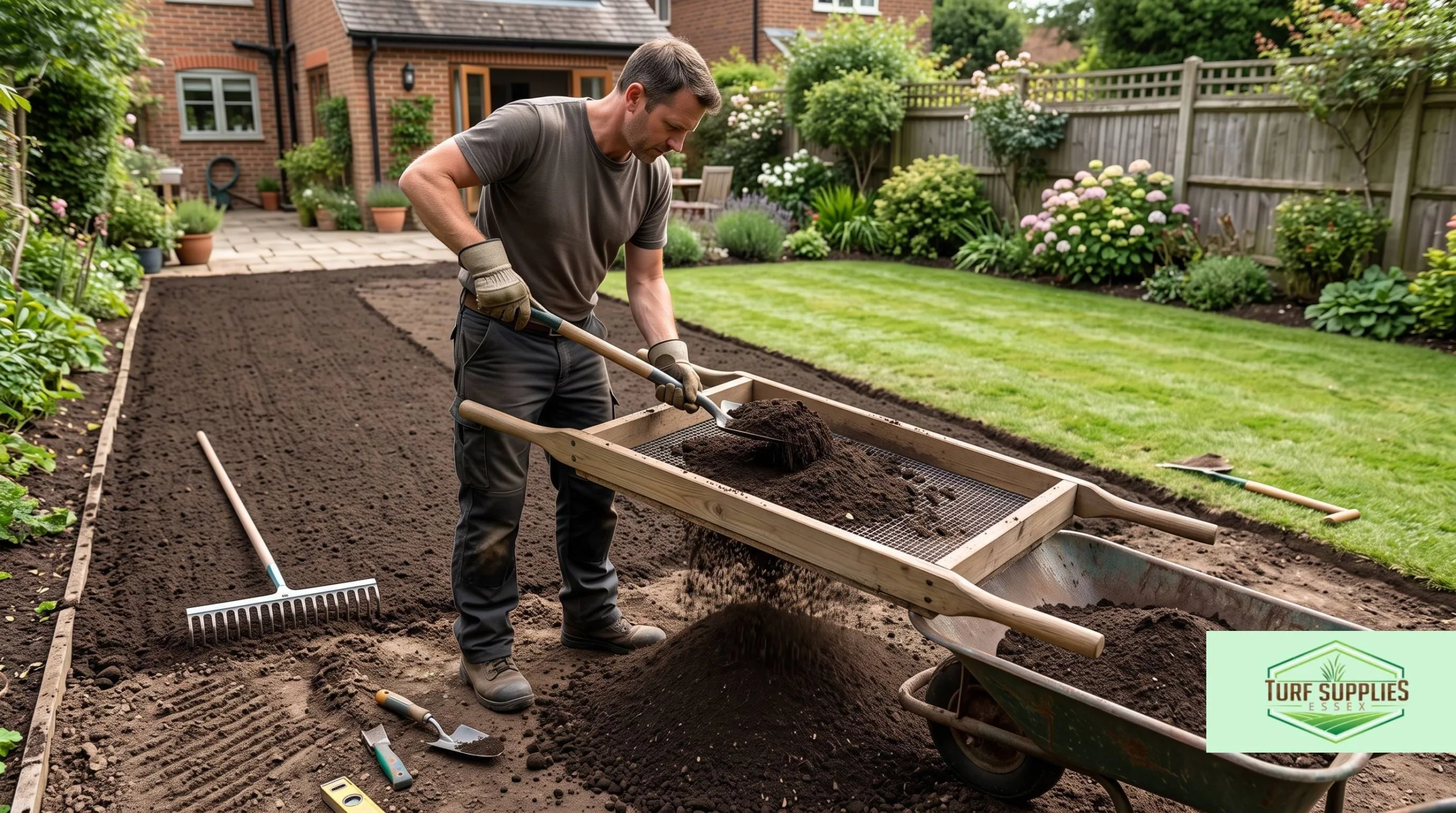
- Soil Riddle (Garden Sieve): Fitted with a ten to twelve-millimetre mesh for sifting stones and hard lumps.
- Wide Landscaping Rake: An aluminium flat rake for spreading soil, removing debris, and final grading.
- Long Straight Edge and Spirit Level: A two to three-metre straight wooden timber or aluminium screed rule to spot dips and humps.
- Wheelbarrow and Shovel: For transporting screened material and topsoil across the plot.
- Laying Boards: To protect your finished grade once installation begins.
Step 1: Clearing Old Turf, Weeds, and Surface Debris
The first physical step in your preparation journey is to clear the ground down to clean earth. Never attempt to lay new turf rolls over old, patchy grass or established weeds. Existing weeds will push straight through fresh turf joints, while buried organic matter can decompose unevenly, creating underground voids and fungal issues.
Use a flat-bladed spade or hire a mechanical turf cutter to slice underneath the existing vegetation at a depth of roughly twenty-five millimetres. Lift the old sod away completely.
Walk the entire site and collect large stones, old roots, fragments of masonry, and timber offcuts. Clearing this layer provides clean, unobstructed access to the native subsoil that will form the base of your new lawn.
Step 2: Decompacting and Cultivating the Subsoil
Beneath the old turf, the ground is almost certainly compacted from years of foot traffic, garden furniture, or recent building works. Water cannot penetrate heavily compacted soil, and delicate new roots cannot push through it to find moisture.
The ground must be thoroughly loosened to a depth of at least one hundred and fifty millimetres:
- For Compact Plots: A sturdy garden fork driven into the earth and rocked back and forth will loosen hard pans of earth effectively.
- For Larger Family Gardens: Hiring a petrol rotavator saves substantial time and energy, churning dense ground into workable, crumbly soil.
Ensure the ground is damp but not waterlogged when cultivating. If the soil is soaking wet, mechanical churning will create dense, sticky clods that harden into concrete-like balls when dry. If the ground is bone dry, lightly sprinkle the area with a hose the evening before to soften the soil structure.
Step 3: Screening Garden Soil for a Fine Rootbed
Once the soil is loosened, you must separate fine, friable loam from stones, debris, and stubborn clay balls. Large stones sitting just beneath the surface will obstruct root establishment, cause dry yellow spots during summer heat, and create an unpleasantly bumpy surface underfoot.
This is where screening garden soil with riddle screens proves invaluable for establishing a pristine finish. Pass your cultivated topsoil through a sturdy sieve or timber-framed riddle.
Discard anything larger than ten to fifteen millimetres, such as flint, pebbles, and woody roots. The resulting sifted soil provides an open, airy structure that encourages rapid root elongation and excellent moisture retention.
Step 4: Incorporating Quality Topsoil to Build Depth and Fertility
In many residential plots, the native topsoil layer is either too thin, exhausted of nutrients, or overly sandy or clay-heavy. Grass roots need a minimum of one hundred to one hundred and fifty millimetres of healthy, fertile soil to anchor firmly and survive periods of dry weather.
Introducing certified Premium Top Soil is the most reliable way to build up root depth, fill substantial low hollows, and improve overall soil fertility. High-grade screened loam blends sand, silt, and composted organic matter into a balanced matrix that holds onto vital moisture while allowing excess rainwater to drain away freely.
Distribute the topsoil evenly across the plot using a wheelbarrow, shovelling it into low spots and raking it outward to establish a generous, uniform bed across the entire lawn area.
Step 5: The Crucial Process of Levelling and Screeding
Achieving a truly level lawn is not just about aesthetics; it prevents standing water from collecting in dips and stops high points from being scalped by mower blades.
Understanding the Fall Line
A healthy lawn should have a subtle, gentle slope of around one in eighty falling away from the house, patio, or outbuildings. This subtle fall ensures that heavy surface runoff moves safely toward drainage borders or soakaways rather than pooling against building brickwork.
Levelling Soil for a New Lawn
When levelling soil for new lawn projects, work systematically across the area:
- Initial Rough Rake: Use your landscaping rake to push excess soil from mounds into hollows, following the natural contour of your boundary edges.
- The Heel-Packing Method: Never leave cultivated soil loose and fluffy, as rainfall will cause it to sink unevenly later. Walk systematically across the entire plot using tiny, overlapping steps with your body weight focused on your heels. This consolidates the soil and presses out hidden underground air pockets.
- Checking with a Straight Edge: Lay a long timber plank or screed rule across the soil with a spirit level on top. Rotate the plank in multiple directions. Wherever light shows beneath the wood, shovel in more screened soil; wherever the wood catches on a bump, rake the excess away.
- Final Light Rake: Finish by lightly raking the consolidated surface in two directions to create a fine crumb tilth roughly fifteen millimetres deep. This provides a soft, receptive bed into which new turf roots can anchor without disturbing the firm base beneath.
Sourcing Fresh Turf from Trusted Suppliers
Once your ground is fully screened, graded, and consolidated, you are ready for the arrival of your grass rolls. Careful coordination with reputable lawn turf suppliers Bedford ensures your rolls arrive in peak condition.
Choosing the right grade of grass for your garden’s specific sun and shade exposure guarantees long-term durability. High-grade varieties like Essex Premium Sun Turf offer exceptional drought resilience, making them a fantastic choice for open, sun-drenched gardens where foot traffic is high.
Reliable scheduling through a specialist turf shop guarantees that your turf is harvested fresh from nursery fields to order. Partnering with quality turf suppliers who handle transport with care means your turf arrives cool, hydrated, and ready for immediate unrolling.
Using these rigorous soil preparation methods ensures that bedford turf supplies for UK gardens root rapidly into the ground, creating thick, hardwearing lawns that withstand family activities, garden parties, and the unpredictable British climate.
Working with an established turf supplier who understands proper pallet loading, rapid transport, and roadside offloading takes all the stress out of your delivery morning.
Preparing for Delivery Morning
To make delivery and installation as smooth as possible, keep the following logistics in mind:
- Clear Access: Ensure there is a clear, unobstructed route from the kerbside to your back garden. Move vehicles, open gates, and clear pathways of bins and planters.
- Staging Ground: Designate a flat, shaded spot on your driveway or front lawn where pallets can be safely placed by the delivery vehicle’s crane or tail lift.
- Pre-Dampen the Seedbed: If the weather is warm, lightly mist your levelled soil the evening before delivery. Never lay turf onto hot, bone-dry earth, as it draws moisture straight out of the cut roots.
- Have Laying Boards Ready: Lay out scaffolding boards or plywood sheets so you can work across your freshly levelled soil without causing indentations.
Arranging prompt garden turf delivery Bedford homeowners depend on ensures your materials arrive right when your ground is prepped and waiting.
Frequently Asked Questions
How firm should my prepared soil be before turf arrives?
Your soil should be consolidated to the point where walking across it in flat shoes leaves only faint surface impressions, not deep footprints. If your feet sink into the ground, the soil requires further heel-packing and raking to prevent future dips.
Can I leave my turf rolled up on the pallet for a couple of days?
No. Fresh turf should ideally be laid on the day of delivery, particularly in spring and summer. Rolls left rolled up generate heat internally, leading to yellowing, root death, and rapid deterioration.
What are your typical delivery response times and scheduling windows?
Deliveries are normally fulfilled within twenty-four to forty-eight hours of placing your order. You can select your preferred delivery date at checkout so your turf arrives on the exact morning you plan to lay it.
Which areas are covered by your turf delivery service?
Full delivery coverage extends across Bedford, Kempston, Biddenham, Bromham, Clapham, Sandy, Biggleswade, and surrounding Bedfordshire villages, alongside comprehensive service across Essex and the wider South East region.
Should I apply fertiliser before laying the new turf rolls?
Yes. Lightly raking a balanced pre-turf starter fertiliser into the top few millimetres of your screened soil provides essential phosphorus, which accelerates root growth and helps the lawn knit firmly into the earth.
Final Thoughts & Next Steps
Taking the time to clear, decompact, screen, and level your garden soil is the single most important investment you can make in your new lawn. By eliminating stones, incorporating nutrient-dense topsoil, and screeding the surface to a true level, you create an optimal environment for roots to take hold immediately upon arrival.
If you are planning a garden makeover and searching for dependable turf suppliers near me, choosing fresh-cut turf ensures your project starts with healthy, vigorous grass. Sourcing certified materials and booking professional assistance for turfing near me guarantees precision groundwork from start to finish. Securing prompt, reliable turf delivery near me means your living rolls arrive fresh and hydrated, ready to transform your garden.
Whether you are landscaping a property in Bedfordshire or organising bedford turf supplies in Essex, Turf Supplies Essex is your reliable, affordable, and professional local specialist. Providing farm-fresh, premium varieties such as Essex Premium Sun Turf alongside certified topsoil solutions, their experienced team helps you achieve a pristine, re