
Quick Summary
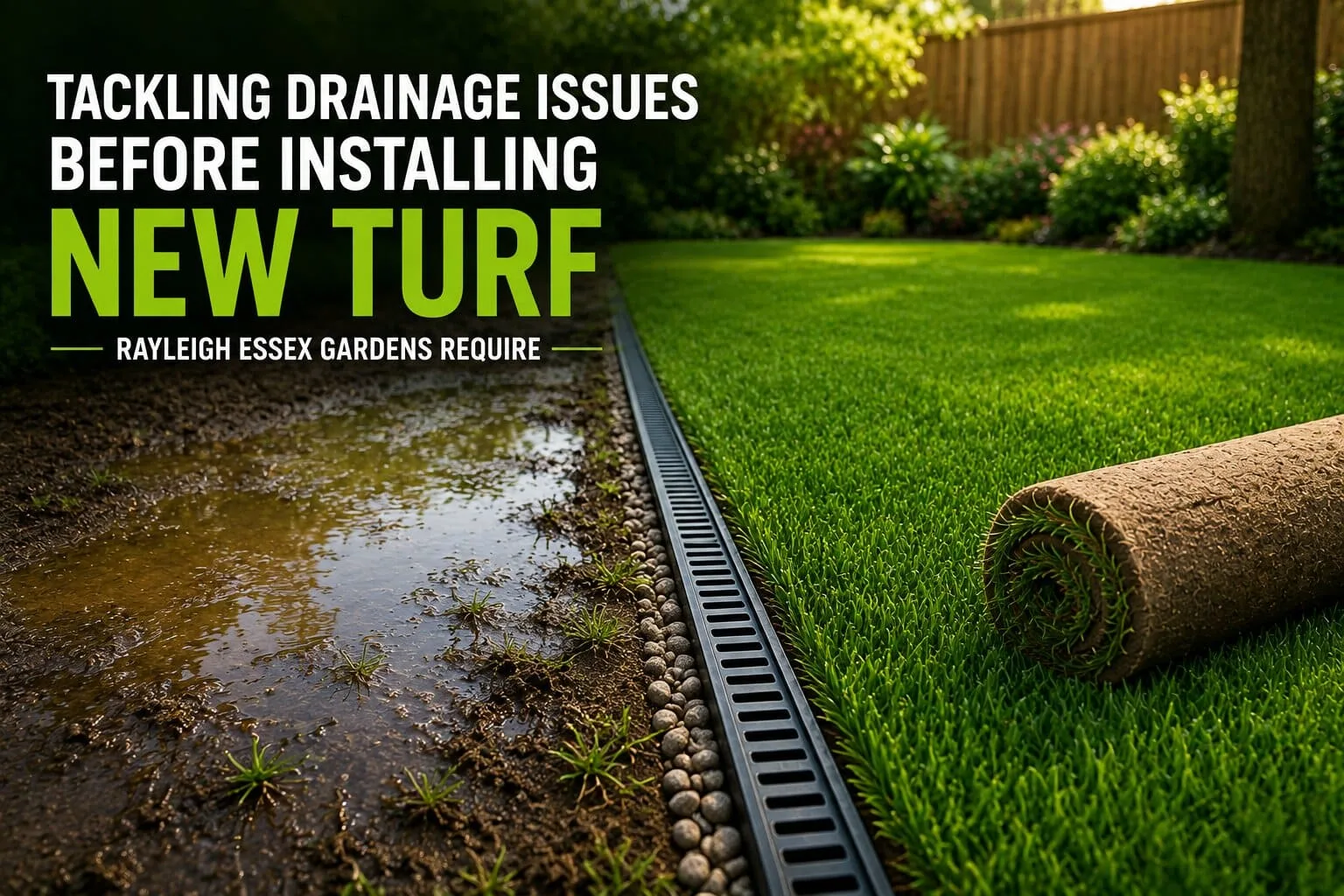
- Fixing subsoil waterlogging is crucial before laying fresh turf rayleigh essex gardens require to prevent dead roots and spongy moss.
- Rayleigh’s heavy clay subsoil creates poor drainage, which must be decompacted and conditioned prior to lawn installation.
- Incorporating screened topsoil builds a porous, nutrient-rich seedbed that lets surface rainwater percolate downwards smoothly.
- Simple solutions like land drainage trenches, gravel French drains, and sand aeration protect your grass through wet British winters.
- Sourcing fresh farm-cut lawn rolls and certified rootzone soil guarantees that your new lawn stays firm, level, and vibrant year-round.
A brand new lawn can completely revitalise an outdoor space, turning a neglected plot into an inviting green haven for relaxing, outdoor dining, and family life. Yet many property owners find themselves disheartened when a recently unrolled lawn becomes a boggy, squelchy swamp after the first heavy downpour. Laying grass rolls directly over poorly draining, compacted subsoil will inevitably suffocate fragile root networks, encourage invasive moss, and cause the grass sward to rot from beneath.
When planning to install fresh turf rayleigh essex in Essex, understanding local ground conditions is half the battle. Because properties throughout the Rochford district sit atop dense London clay, getting your drainage right before unrolling living turf is the single most important step you can take.
Experienced homeowners and landscape specialists frequently rely on Turf Supplies Essex for the prompt delivery of farm-fresh turf, screened loam, and certified Premium Top Soil, knowing that dependable materials paired with proper ground preparation create resilient lawns that stand the test of time.
Get expert guidance on ground prep, drainage, and fresh turf delivery across Rayleigh. Tap below to message us on WhatsApp for your fast, free estimate!
Why Rayleigh Lawns Suffer From Poor Drainage
To solve drainage problems effectively, it helps to look at the ground beneath your feet. South Essex is notorious for its geological profile, dominated by heavy, mineral-dense clay.
While clay soil is chemically fertile and holds valuable nutrients, its physical structure poses real challenges for domestic turf:
- Microscopic Soil Particles: Clay particles pack tightly against one another with virtually no pore space between them, creating a subterranean barrier that slows down water percolation.
- Severe Compaction: Foot traffic, wheelbarrows, garden furniture, and building work press remaining air pockets out of clay, turning the ground into an impermeable shelf.
- Surface Puddling: During persistent winter rainfall, water cannot filter down, remaining trapped in the top layer where turf roots need oxygen.
- Summer Baking: Once dry, uncultivated clay shrinks and hardens like concrete, causing subsequent rainwater to run straight across the surface into low-lying corners.
Without proactive intervention, laying new turf over untreated ground locks in these structural flaws. The roots of your new grass simply cannot establish, leaving you with an uneven, patchy surface.
Assessing Your Garden Drainage Before Laying Turf
Before ordering rolls of grass or hiring excavation tools, you must carry out a simple drainage assessment across your garden plot.
The Percolation Test
Dig two or three test holes across your proposed lawn area, roughly thirty centimetres deep and thirty centimetres wide. Fill each hole completely with water and allow it to drain away fully to saturate the surrounding earth.
Once drained, fill the holes again and measure how quickly the water level falls using a wooden ruler:
- Good Drainage: The water drops at least twenty-five millimetres per hour. The soil is permeable and ready for standard cultivation.
- Moderate Drainage: The water drops between ten and twenty-five millimetres per hour. Soil aeration and topsoil conditioning will be required.
- Poor Drainage: The water takes over twelve hours to drain away or barely moves. Subsurface drainage pipework or French drains are essential.
Identifying Low Hollows and Fall Lines
Walk the boundary of your garden to examine natural slope lines. Water always follows gravity; if your garden slopes toward a patio, boundary wall, or foundation, the ground must be regraded so surface runoff flows safely away toward gravel soakaways or planted borders.
Physical Subsoil Cultivation and Decompaction
Once you have identified the severity of your drainage problems, the physical ground preparation begins.
Stripping Away Old Vegetation
Never lay new grass over tired, weed-infested turf. Use a mechanical turf cutter or a flat spade to slice underneath the existing sod, removing old grass, weed rhizomes, and surface thatch. Clearing the area gives you direct access to the problem soil beneath.
Deep Forking and Rotavating
Compacted earth must be broken up down to a depth of at least one hundred and fifty millimetres. For compact suburban gardens, manual digging with a heavy garden fork will open up fissures in the clay. For larger residential lawns, a petrol-driven rotary cultivator or rotavator makes light work of the task.
Always cultivate when the ground is damp but crumbly. Attempting to rotavate saturated clay creates dense, greasy clods that bake into hard lumps, while bone-dry clay will quickly wear down cultivator blades.
Effective Lawn Drainage Solutions
Depending on the results of your percolation test, you can implement one or more proven drainage methods before adding your planting soil.
Installing French Drains and Perforated Land Pipes
For gardens that suffer from standing pools of water, installing lawn drainage Essex professionals recommend is the most permanent remedy.
Dig a series of trenches across the garden in a herringbone pattern, leading to a deep gravel soakaway located at least five metres from any building foundations. The trenches should have a gentle downhill fall of approximately one in eighty.
Line the bottom and sides of the trenches with non-woven geotextile membrane to stop fine silt from clogging the system. Lay perforated plastic land drain pipe along the trench floor, backfill with clean pea shingle or washed aggregate, and fold the membrane over the top. This channels excess groundwater away swiftly during storms.
Adding Coarse Sand for Subsoil Percolation
If your garden has moderate water retention without standing surface pools, focus on improving garden subsoil percolation by blending sharp, coarse horticultural sand or washed grit into the top four inches of cultivated subsoil.
The coarse particles introduce physical air spaces between the tight clay platelets, creating micro-channels that allow gravitational water to move away freely.
Building the Ideal Rootbed with Screened Topsoil
Once subsurface drainage channels are in place, the next phase is creating a fertile, porous bed where grass roots can thrive.
Simply laying grass over clay, even after rotavating, leaves roots vulnerable to oxygen starvation. You need a dedicated layer of free-draining, nutrient-rich soil. Working with reputable topsoil essex suppliers ensures you receive finely screened soil free from large stones, persistent weed roots, and industrial contaminants.
For standard domestic garden renovations, ordering a top soil 1 tonne bulk bag delivers the required volume to lift levels and smooth out depressions. High-grade essex topsoil contains a balanced blend of coarse sand, silt, and natural organic matter, making it moisture-retentive without holding onto excessive water.
Spreading a fifty to seventy-five millimetre layer of certified Premium Top Soil across the consolidated base creates an open, breathable sponge. This layer absorbs rainfall, filters moisture smoothly toward the underlying drainage channels, and delivers vital nitrogen, potassium, and phosphorus directly to the establishing roots.
Adopting these careful levelling and water-management steps makes installing turf rayleigh essex for UK gardens a completely reliable process that yields thick, emerald swards year after year.
Levelling, Consolidating, and Final Grading
With drainage installed and fresh topsoil evenly distributed, you must consolidate the bed to ensure a perfectly flat finish.
The Heel-Packing Technique
Raking soil flat without firming it is a frequent mistake. Fluffy, loose soil inevitably collapses into hollows once heavy rain arrives. Walk across the entire area using small, overlapping steps with your weight on your heels to press out underground air pockets.
Once the area is trodden down, use a wide landscaping rake to level the surface, pulling soil from high points into minor depressions until the bed is as flat as a tabletop.
Applying Pre-Turf Nutrition
Lightly scatter a balanced pre-turf starter fertiliser over the raked topsoil. Starter fertilisers rich in phosphorus encourage rapid root elongation, helping young turf knit securely into the screened loam within days of delivery.
Sourcing and Laying Fresh Lawn Turf
The physical quality and freshness of your turf rolls dictate how quickly the lawn recovers from transplant shock.
Choosing a dedicated local turf supplier guarantees that your rolls are cut fresh from nursery fields rather than sitting on pallets in retail depots where heat builds up and damages cut roots.
Ensure you only lay fresh cut lawn turf rolls that are moist, vibrant green, and cool to the touch. Lay the first row along a straight boundary such as a patio or garden pathway. Stagger subsequent rows in a brickwork pattern, butting edges and ends tightly together without stretching the sod.
Always work from wooden laying boards placed across newly laid turf. Walking directly on unrooted grass will compress the carefully graded topsoil beneath and leave uneven footprint depressions.
Post-Installation Watering and Maintenance
Proper aftercare ensures that your drainage preparations and new turf work together seamlessly:
- Initial Soak: Immediately after installation, soak the lawn thoroughly. Lift a corner roll to confirm water has penetrated through the turf mat into the topsoil below.
- First Two Weeks: Water once daily during dry spells, ideally in the early morning to minimise evaporation and prevent evening dampness that can trigger fungal growth.
- Routine Checking: Look out for areas along fence lines or sheltered corners that might need extra water, and ensure water does not puddle in any low spots.
- The First Mow: Once the turf cannot be lifted by hand (usually after fourteen to twenty-one days), trim the lawn with mower blades set at their highest cut, taking off no more than the top third of the blade.
Frequently Asked Questions
Why does my lawn feel squelchy even days after rain stops?
Squelchy lawns are usually caused by an impermeable clay subsoil layer beneath the turf. Water cannot percolate down into the deeper ground, leaving the root zone waterlogged and oxygen-starved. Incorporating screened topsoil and sand aeration resolves this.
Can I fix lawn drainage without digging up my entire garden?
For minor drainage issues, mechanical hollow-tine aeration followed by brushing coarse sand and topsoil dressing into the holes can help. However, for severe pooling on heavy clay, lifting the lawn to install proper land drainage and fresh topsoil is the only lasting solution.
What are your typical delivery response times for Rayleigh and South Essex?
Turf Supplies Essex provides prompt delivery throughout the working week. Freshly cut turf rolls and bulk bags of topsoil are normally dispatched to Rayleigh and surrounding areas within twenty-four to forty-eight hours of ordering to ensure maximum product freshness.
Which areas around Rayleigh do you cover for deliveries?
Full delivery coverage includes Rayleigh, Eastwood, Hockley, Hullbridge, Rochford, Hadleigh, Thundersley, Benfleet, Wickford, and the wider Essex region, using dedicated vehicles fitted with crane offloaders for easy kerbside placement.
How soon after fixing drainage can I lay my new turf?
You can lay fresh turf immediately after installing drainage channels, spreading topsoil, and consolidating the seedbed. In fact, laying turf promptly protects the freshly prepared soil surface from washing away during heavy rain.
Final Thoughts & Next Steps
Overcoming persistent drainage problems requires effort and the right approach, but the long-term payoff is an immaculate, hard-wearing lawn that looks incredible through every season. By breaking up compacted clay, installing effective drainage pipework, and dressing the plot with rich screened loam, you build a healthy, free-draining foundation that supports vibrant grass growth for decades.
If you are currently planning a garden renovation and searching for trusted turf suppliers near me, choosing farm-fresh rolls ensures fast, healthy rooting. Partnering with reputable topsoil suppliers near me guarantees that your screened loam arrives clean, fertile, and ready to spread. Sourcing professional assistance for turfing near me gives you access to the groundwork expertise needed to conquer challenging ground conditions.
For property owners searching for high-quality turf rayleigh essex in Essex, Turf Supplies Essex remains your dependable, affordable, and professional local specialist. From freshly harvested lawn varieties to nutrient-dense Premium Top Soil, having quality materials delivered directly to your kerbside ensures your garden drainage transformation is smooth, successful, and built to last.