
Quick Summary
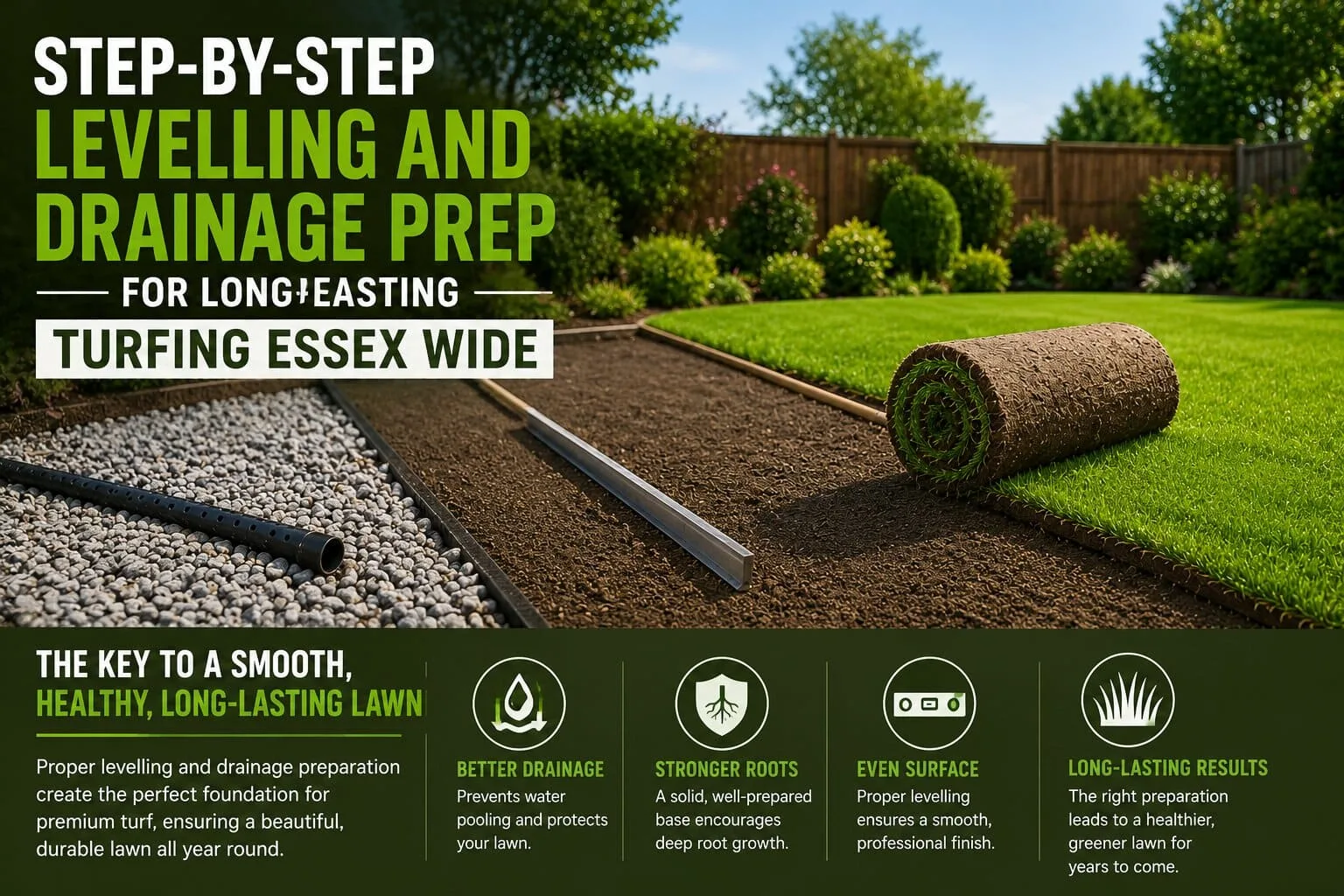
- Proper ground preparation and subsoil levelling form the true foundation for high-quality, long-lasting turfing essex garden transformations.
- Resolving regional drainage hurdles prevents surface waterlogging, moss infestation, and premature turf root rot.
- Incorporating fine, screened topsoil creates a smooth, nutrient-dense seedbed that ensures rapid turf establishment.
- Correct consolidation and heel-packing eliminate soft subsoil hollows and bumpy dips before unrolling new grass.
- Sourcing fresh farm-cut turf rolls alongside certified soil materials guarantees durable, emerald-green lawn performance across every season.
A vibrant, level green lawn is one of the most rewarding additions you can make to your home. It creates an inviting outdoor living room where children can play, pets can run, and families can unwind throughout warm summer afternoons. However, rolling out fresh turf over bumpy, compacted, or poorly draining ground almost always ends in frustration. Without diligent ground preparation, even the highest-grade turf rolls will struggle to take root, eventually developing sunken puddles, spongy moss patches, and thin grass.
When approaching turfing essex in Essex, dealing with local geological factors such as dense London clay and variable subsoil composition makes careful site levelling and water management essential. Local gardeners and landscape professionals regularly count on Turf Supplies Essex for prompt deliveries of farm-fresh turf, screened loam, and certified Premium Top Soil, knowing that dependable materials paired with thorough groundwork deliver immaculate lawns built to last.
Want expert advice on seasonal watering for your fresh premium turf in Enfield? Message us on WhatsApp now for your free, no-obligation quote!
Why Ground Preparation Determines Lawn Longevity
Many homeowners assume that laying turf is simply a matter of clearing surface weeds and unrolling green carpet. In reality, more than eighty percent of a lawn’s long-term health depends on what happens beneath the turf rolls before installation day.
When turf is cut from the grower’s field, its root system is trimmed to facilitate transport. Once laid in your garden, those grass plants must quickly push out fresh roots deep into the underlying earth to find moisture and nutrients.
If the ground below is rock-hard, uneven, or waterlogged, those young roots hit a physical barrier. Shallow roots leave grass vulnerable to summer scorch, while standing water suffocates root crowns and invites opportunistic fungal diseases. Taking the time to grade, drain, and enrich the soil base gives your new lawn the best possible start.
Addressing Regional Soil Challenges: The Essex Clay Factor
Much of Essex and the wider East of England rests on heavy clay deposits. While clay holds natural mineral nutrients exceptionally well, its physical structure poses significant landscaping challenges:
- Slow Water Percolation: Clay soil particles are microscopic and pack tightly together, meaning heavy rain sits on the surface rather than draining away smoothly.
- Compaction and Poor Aeration: Walking across wet clay presses out air pockets, starving roots of the oxygen they require to metabolise nutrients.
- Baking and Cracking: During hot, dry summer months, unprotected clay shrinks and bakes into a brick-like crust that repels moisture.
Overcoming these structural hurdles requires a deliberate strategy that combines physical decompaction with the addition of well-structured soil conditioners.
Step 1: Site Clearance and Old Turf Removal
The first step in site preparation is stripping away existing vegetation, stones, and garden debris.
Begin by removing any old, tired lawn. While you can dig it out using a sharp spade for small courtyard plots, hiring a mechanical turf cutter for larger gardens saves significant time and effort. A turf cutter slices cleanly beneath the root layer, allowing you to roll up and remove old weed-filled grass in tidy strips.
Clear away large stones, buried building rubble, tree roots, and stubborn perennial weeds like nettles and dandelions. Avoid simply burying weeds beneath fresh topsoil, as persistent root systems will push up through your newly laid turf within weeks.
Step 2: Relieving Deep Soil Compaction
Once the ground is cleared down to bare earth, the subsoil must be thoroughly broken up to allow moisture and roots to penetrate downwards.
For smaller garden spaces, hand-digging with a sturdy garden fork to a depth of roughly one hundred to one hundred and fifty millimetres will suffice. For medium to large domestic lawns, using a mechanical rotary cultivator or rotavator is far more efficient.
Cultivate the soil when it is reasonably dry and crumbly. Rotavating soaking wet clay churns the soil into heavy, dense clods that dry into solid lumps, making final levelling nearly impossible.
Step 3: Installing Drainage Solutions for Problem Sites
If your garden regularly suffers from standing water or squelchy hollows following rainfall, you must install drainage improvements before adding topsoil or unrolling turf.
French Drains and Soakaways
For severe water retention issues, dig a series of shallow trenches in a herringbone pattern across the lawn area, sloping gently away from your home toward a gravel soakaway. Line the trenches with non-woven geotextile membrane, insert perforated land drainage pipes, backfill with clean pea shingle, and wrap the membrane over the top to keep fine soil particles out.
Sand and Organic Soil Conditioning
For moderate drainage problems, blending coarse horticultural sand and well-rotted organic compost directly into the top four inches of clay subsoil opens up natural microscopic channels, allowing surface runoff to sink away freely.
Step 4: Adding Nutrient-Rich Topsoil
After cultivating and addressing drainage, it is time to build a fertile, free-draining root bed. Incorporating high-grade organic premium topsoil ensures your grass has immediate access to rich organic matter, balanced pH levels, and essential microbial life.
Spread a generous layer of topsoil for turf laying across the entire area, aiming for a consistent depth of fifty to seventy-five millimetres. If you are improving existing planting borders at the same time, using dedicated garden bed top soil alongside your lawn base creates a clean, uniform finish across the garden.
Applying high-calibre landscaping topsoil balances moisture retention with free drainage, ensuring the turf base stays moist without becoming waterlogged. For homeowners planning projects, evaluating the overall cost of premium topsoil against the expense of replacing failed, starved turf makes quality soil one of the smartest investments in the landscaping process.
Choosing to order combined packages of topsoil and turfing Essex suppliers offer guarantees that fresh turf rolls arrive right as your soil bed reaches prime readiness.
Adopting these disciplined ground preparation methods makes turfing essex for UK gardens a straightforward, predictable success that yields durable, lush turf year after year.
Step 5: Levelling, Consolidation, and Heel-Packing
Creating a level finish is not just about aesthetics; it also prevents your lawnmower from scalping high ridges or sinking into soft hollows later on.
The Foot-Shuffling Technique
Never skip consolidation. Raking loose topsoil flat without firming it leaves soft pockets beneath the surface. When rain falls or people walk across the lawn, those soft pockets collapse into unsightly dips.
Consolidate the soil by treading across the entire plot with small, overlapping steps, placing your weight on your heels. Walk systematically across the area in one direction, then repeat the process at a ninety-degree angle.
Final Grading and Raking
Once consolidated, use a wide landscaping rake to grade the soil, removing small stones larger than a twenty-pence piece. Use a long straight edge or a level board pulled across the surface to identify and fill minor low spots. The final seedbed should resemble a firm, fine, crumbly cake mixture that leaves faint footprint impressions when walked upon.
Step 6: Pre-Turf Nutrition and Professional Turf Laying
Just before laying your turf rolls, lightly scatter a balanced pre-turf starter fertiliser across the raked surface and gently work it into the top few millimetres of soil. Starter fertilisers provide easily accessible phosphorus and potassium that encourage explosive early root development.
When undertaking turf installation Essex homeowners should source fresh materials that have been cut within twenty-four hours. Lay rolls in a staggered brickwork pattern, butting edges and ends tightly together without overlapping or stretching the turf. Use laying boards to walk across freshly unrolled sections to spread your body weight evenly and keep the graded soil flat.
For large plots, steep gradients, or properties requiring complete garden excavation, hiring professional lawn replacement services Essex specialists guarantees that ground preparation, mechanical rotavating, and seam alignment are completed to exacting standards.
Arranging prompt turf rolls delivery Essex ensures that living rolls are moved directly from the grower’s pallet onto moist, prepared soil without sitting in drying heat.
Step 7: Initial Hydration and Ongoing Establishment
Immediately after installation, give the lawn a deep, thorough watering. The water must soak completely through the turf backing and penetrate into the prepared topsoil beneath.
- First Two Weeks: Water once or twice daily during dry weather to keep the turf backing consistently moist. Check progress by gently lifting a corner roll; you should see fine white root filaments anchoring into the soil within seven to ten days.
- Third and Fourth Weeks: Reduce watering frequency to two or three times weekly, encouraging roots to push deeper into the subsoil in search of moisture.
- First Mowing: Once the grass reaches roughly sixty millimetres and rolls cannot be lifted by hand, complete the first mow with blades set at their highest position, removing only the top third of the leaf blade.
Frequently Asked Questions
Why is consolidating the soil so important before laying turf?
Consolidating, or heel-packing, eliminates subterranean air pockets. If you lay turf over loose, fluffy soil, the ground will settle unevenly after the first heavy rainfall, leaving you with a lumpy, bumpy lawn that is difficult to mow neatly.
How deep should the topsoil layer be under new turf?
A minimum depth of fifty millimetres of high-quality, screened topsoil is recommended. For gardens with poor, rocky, or heavily compacted clay subsoils, increasing the depth to seventy-five to one hundred millimetres provides superior root depth, drainage, and long-term drought resilience.
What are your delivery response times for topsoil and turf across Essex?
Turf Supplies Essex provides prompt delivery throughout the working week. Turf rolls are cut fresh to order and topsoil is dispatched rapidly, typically arriving on-site within twenty-four to forty-eight hours to keep your garden transformation on schedule.
Which areas across Essex do you cover for deliveries?
Full delivery coverage spans Chelmsford, Brentwood, Southend-on-Sea, Colchester, Braintree, Basildon, Epping, Harlow, and surrounding East London borders, using dedicated vehicles equipped for convenient kerbside offloading.
Can I lay turf directly on top of my old lawn to save time?
Laying new turf directly over an old lawn is never recommended. The old grass and weed layer will rot down anaerobically, creating a barrier that prevents new roots from penetrating the soil, leading to shallow rooting, disease, and lawn failure.
Final Thoughts & Next Steps
Transforming an uneven, poorly draining garden into a showpiece lawn requires patience, physical effort, and the right materials. By stripping old vegetation, relieving subsoil compaction, adding free-draining screened loam, and carefully consolidating the seedbed, you establish an enduring foundation that keeps your lawn healthy and level for decades.
If you are currently planning a garden overhaul and searching for premium topsoil near me, choosing certified, weed-free blends gives your grass roots the best start. Sourcing high-grade bulk topsoil near me guarantees you have sufficient depth to correct hollows and grade slopes effectively. Partnering with reputable topsoil suppliers near me ensures that screened, fertile materials arrive clean and ready to spread.
For homeowners embarking on garden transformations requiring turfing essex in Essex, Turf Supplies Essex remains the dependable, affordable, and professional local provider. From freshly harvested turf varieties to rich, screened Premium Top Soil, ordering quality local supplies directly to your property makes achieving a flawless, level lawn simple and rewarding.