
Quick Summary
- Laying fresh premium turf enfield gardens need requires a tailored seasonal watering routine to establish deep, resilient roots into the subsoil.
- The first two to three weeks after installation are critical, requiring daily, deep hydration to prevent the turf rolls from shrinking or drying out.
- Overwatering can be just as damaging as underwatering, leading to shallow root networks, fungal issues, and waterlogged clay ground.
- Adjusting your watering schedule across spring, summer, autumn, and winter ensures grass stays healthy while conserving water.
- Sourcing high-quality turf varieties combined with proper ground preparation ensures your new lawn thrives through every weather shift.
Investing in a newly laid lawn transforms your outdoor living space, turning worn ground into a lush, vibrant green carpet that your whole family can enjoy. However, unrolling fresh turf is only the first step in creating a long-lasting garden feature. The true secret to long-term success lies beneath the surface, where fragile young grass roots must anchor themselves firmly into the underlying earth. Establishing a balanced, responsive seasonal watering routine for your newly laid premium turf enfield lawn makes the difference between a lawn that struggles during dry spells and one that stays emerald green throughout the year.
For homeowners managing premium turf enfield in Essex, local factors such as heavy London clay and changeable weather demand sensible, well-timed care. Gardeners and landscaping professionals frequently turn to Turf Supplies Essex for prompt deliveries of farm-fresh turf rolls, rich soil, and climate-resilient varieties like Drought Defender Turf, knowing that reliable materials and good hydration habits build strong, enduring lawns.
Ready to give your garden the perfect start with fresh premium turf in Enfield? Tap below to chat on WhatsApp and grab your free estimate today!
The Critical First Month: Establishing Your Fresh Turf
When turf rolls are harvested from the field, up to eighty percent of their root system is temporarily cut away. Until those roots push down into your garden soil, the grass plants rely entirely on the moisture held in the top few inches of topsoil and the turf backing.
Week One: Deep, Immediate Hydration
The moment installation finishes, your lawn needs an immediate, thorough soaking. Water must penetrate through the turf mat and soak at least one hundred millimetres into the prepared soil beneath.
During this first week, water once or twice daily, depending on temperature and wind. A good indicator is gently lifting the corner of a roll in a few spots. If the underside of the turf and the soil beneath feel moist and cool, your moisture levels are right on track. If the earth feels dusty or hard, increase your watering duration immediately.
Weeks Two and Three: Encouraging Root Exploration
As the grass begins to send out white, tender root shoots, you want to encourage them to search downward for moisture rather than staying near the surface.
Transition from light, frequent waterings to deeper, less frequent soakings. Watering every other day for a longer period trains the roots to travel deeper into the earth, building a sturdy anchor that can withstand future heat.
Week Four and Beyond: Transition to Routine Care
By the fourth week, you should no longer be able to lift the edges of the turf rolls. The root system is now knitting into the garden base. You can now move toward a standard seasonal watering routine tailored to current British weather conditions.
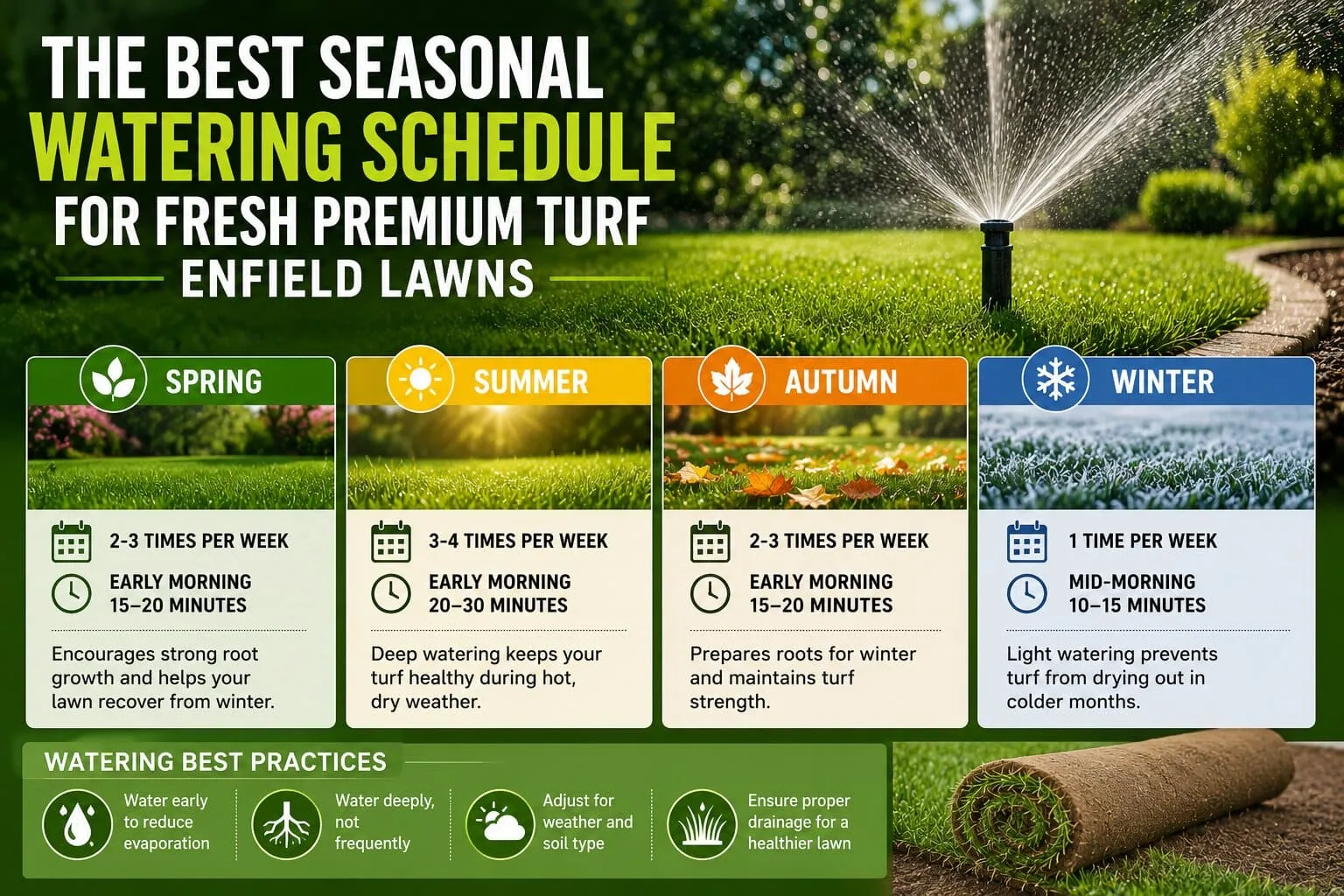
Spring Watering Schedule: Supporting Rapid Growth
Spring is one of the most popular times for laying turf across North London and surrounding counties. As daytime temperatures rise past eight degrees Celsius, grass wakes from winter dormancy and enters an active growth cycle.
- Frequency: Two to three times per week during dry periods.
- Timing: Early morning between six and nine in the morning.
- Target: Maintain consistent moisture without creating soggy, saturated ground.
During March and April, rainfall can be unpredictable. Pay attention to natural showers, but do not assume a light spring drizzle is enough to hydrate root systems. Check the soil depth with a garden trowel. If the top two inches are dry, run your sprinkler for twenty to thirty minutes.
In May, rising sun levels and drying breezes can sap moisture from leaf blades quickly. Morning watering allows the water to soak down to the root zone before midday sunshine causes rapid evaporation.
Summer Watering Schedule: Defeating Heat and Drought
Summer presents the greatest challenge for any lawn. High temperatures, direct sunlight, and prolonged dry spells put severe moisture stress on turf grasses.
- Frequency: Three to four times weekly, or daily during prolonged heatwaves.
- Timing: Early morning is best, or late evening once the sun begins to set.
- Target: Soak deeply to reach root depth of seventy to one hundred millimetres.
During warm months, avoid watering in the middle of the day. Much of the water evaporates before reaching the soil, and water droplets on grass blades can increase heat stress.
A great way to test if your summer lawn needs water is the footprint test. Walk across the grass; if the blades spring back immediately, the lawn has plenty of moisture. If your footprints remain visible and the grass stays flat, the turf is thirsty and requires an immediate deep soak.
Autumn Watering Schedule: Preparing for Cold Weather
Autumn provides warm soil and cooler air, making it an ideal season for root development. Natural rainfall increases, but you still need to monitor newly laid turf closely.
- Frequency: One to two times weekly if rainfall is below average.
- Timing: Mid-morning once early frost or heavy dew has lifted.
- Target: Keep the root zone moist while preventing standing surface water.
As daylight hours shorten in September and October, soil retains moisture for much longer. Reduce your sprinkler runtime to prevent the ground from becoming waterlogged. Saturated soil combined with falling autumn leaves creates an environment where lawn moss and fungal diseases like red thread can take hold.
Ensure you clear fallen leaves off the grass before watering so that daylight and airflow reach the soil surface freely.
Winter Care: Managing Natural Moisture
During British winters, grass plants enter a semi-dormant state where vegetative growth slows significantly.
- Frequency: Rarely required, relying almost entirely on natural rainfall.
- Timing: Midday on mild days if unrolling turf during a dry winter spell.
- Target: Avoid watering when freezing conditions or ground frost are forecast.
If you lay turf between November and February, you will only need to water thoroughly right after installation. After that, natural British winter rainfall usually provides all the hydration the lawn needs. Never apply water if the soil is frozen or if sub-zero overnight temperatures are expected, as freezing water can damage root cell walls.
Applying these seasonal techniques ensures that keeping premium turf enfield for UK gardens remains straightforward, efficient, and successful across every month of the year.
Common Watering Mistakes to Avoid
Even with the best intentions, improper watering habits can harm your new lawn. Keeping an eye out for these common errors will protect your investment:
- Frequent Light Sprinkling: Lightly wetting the top few millimetres of grass every afternoon encourages roots to stay near the surface, leaving the lawn vulnerable to heat exhaustion. Deep, thorough soakings build much stronger roots.
- Uneven Sprinkler Coverage: Oscillating and rotating sprinklers often leave dry spots along edges, corners, and fence lines. Check these perimeter zones by hand and supplement with a hose nozzle if they look dry.
- Ignoring Heavy Clay Compaction: Soil across Essex and North London contains dense clay that absorbs water slowly. If water begins puddling on the surface, pause your watering session for thirty minutes to let it sink in before applying more.
- Watering Late at Night During Humid Spells: Leaving grass blades soaking wet overnight in warm, muggy weather can foster fungal conditions. Morning watering is always the safest option.
Choosing Climate-Resilient Grass Varieties
With UK summers becoming warmer and drier, many property owners are rethinking their choice of lawn turf. While traditional meadow mixtures require constant irrigation to stay green during hot spells, modern turf cultivars are bred to stay resilient with significantly less water.
Drought Defender Turf is cultivated using specialized tall fescues and deep-rooting grass varieties engineered to search deep into the subsoil for hidden moisture reserves. This variety develops root systems that reach significantly deeper than standard perennial ryegrass. As a result, it stays lush and green during hot summer dry spells while requiring substantially less supplemental watering, making it an eco-friendly and low-maintenance choice for busy family gardens.
Sourcing Quality Turf and Professional Services
The success of your watering routine depends heavily on the freshness of the grass rolls when they arrive. Sourcing your materials through reputable turf suppliers Enfield guarantees that rolls are harvested fresh from farm fields and delivered with their root moisture intact.
Homeowners looking for dependable delivery can arrange prompt lawn turf delivery Enfield to receive pallets directly onto their driveway or front garden. If you prefer a complete overhaul, booking experienced turf laying services Enfield ensures that ground preparation, grading, and initial watering are carried out to professional standards.
Whether you are renovating a townhouse garden with fresh garden turf Enfield Town or ordering a combined package of topsoil and turf Enfield to build a nutrient-rich foundation, starting with premium products makes long-term care easy. For larger landscaping renovations, hiring a skilled turfing contractor Enfield provides peace of mind that ground drainage issues are resolved before rolls are unrolled.
If your garden features high boundary walls or mature trees, choosing specialized shade tolerant turf Enfield prevents bare patches in sheltered spots. Ordering fresh turf rolls Enfield North London ensures you have the hardwearing, dense foundation needed for a thriving domestic lawn.
Frequently Asked Questions
Q1: How do I know if I am overwatering my new lawn?
If the soil feels squelchy underfoot hours after watering, or if you notice yellowing grass blades accompanied by a sour, musty smell from the soil, you may be overwatering. Reduce the frequency of watering sessions and allow the surface to breathe between soakings.
Q2: Can I water my new turf with collected rainwater?
Yes. Using rainwater collected in water butts is excellent for new grass. Rainwater is free from added mains minerals and chlorine, making it gentle on tender young roots while helping you conserve household water.
Q3: What are your delivery response times for turf orders in and around Enfield?
Turf Supplies Essex provides rapid, reliable delivery services throughout the working week. Turf orders are freshly cut to order and typically dispatched within twenty-four to forty-eight hours directly to your property to ensure maximum freshness on arrival.
Q4: Which areas do you cover for turf and topsoil deliveries?
Full delivery coverage spans Enfield, Barnet, Cheshunt, Waltham Abbey, Potters Bar, Loughton, Epping, and the wider Essex and North London borders. Deliveries are made with dedicated vehicles equipped for easy kerbside offloading.
Q5: When is the best time to give newly laid turf its first cut?
Wait until the turf has firmly rooted into the soil, which usually takes two to three weeks. Check by gently tugging on the grass blades; if the roll does not lift, you can mow. Keep your mower on its highest setting and never remove more than the top third of the blade length.
Final Thoughts & Next Steps
Establishing a healthy, weed-free lawn comes down to understanding the seasonal moisture needs of your grass. By soaking newly laid turf thoroughly during its first month, adapting your watering habits across the seasons, and avoiding common overwatering pitfalls, your garden will maintain a dense, vibrant green appearance for years to come.
If you are planning an upcoming garden renovation and searching for trusted turf suppliers near me, choosing farm-fresh rolls ensures rapid establishment. Sourcing high-grade premium turf near me guarantees a rich, hardwearing lawn that stands up to family foot traffic. For homeowners seeking authentic real lawn grass near me, quality turf rolls provide an instant natural upgrade that synthetic alternatives cannot match.
For property owners seeking top-quality premium turf enfield in Essex, Turf Supplies Essex is your trusted local specialist for reliable, affordable, and professional service. From freshly harvested lawn turf and nutrient-rich topsoil to drought-hardy options like Drought Defender Turf, getting the right materials delivered straight to your door makes lawn care simple and rewarding.